The Faroe Islands are one of the most breathtaking places in Europe for outdoor adventure. With dramatic sea cliffs, rolling green mountains, and remote villages surrounded by the Atlantic Ocean, it feels like a world untouched by time. For travelers who love nature and exploration, discovering the best hikes in the Faroe Islands is an unforgettable experience.
From iconic trails like the Kallur Lighthouse hike to the famous Lake Sørvágsvatn hike, the islands offer some of the most scenic Faroe Islands hiking trails in the world. Whether you are searching for easy hikes in the Faroe Islands or challenging mountain routes, there is a trail for every type of traveler. This guide will help you explore the most beautiful hikes in the Faroe Islands, including hidden routes, useful travel tips, and everything you need to know before planning your Faroe Islands hiking adventure.
Why the Faroe Islands Are One of the Best Hiking Destinations in Europe
The Faroe Islands are often considered one of the most spectacular places in Europe for outdoor adventure. Located in the North Atlantic between Iceland and Norway, these remote islands offer a landscape that feels wild and untouched. One of the main reasons travelers come here is to experience the incredible hikes in the Faroe Islands, where every trail leads to dramatic natural scenery.
One of the most striking features of the Faroe Islands hiking trails is the towering sea cliffs that drop straight into the Atlantic Ocean. Many hikes follow coastal ridges, offering breathtaking views of waves crashing below and green mountains rising above the sea. Trails like the Kallur Lighthouse hike and the Drangarnir sea arch hike are famous for their dramatic cliffside scenery.
Another reason the islands are so special is their untouched nature. Unlike many popular European destinations, much of the Faroe Islands remains wild and peaceful. Hikers can walk through valleys, grassy hills, and remote coastal paths while enjoying some of the most beautiful Faroe Islands nature trails.
The islands are also known for having fewer crowds than Iceland, which has become a major tourist hotspot in recent years. While Iceland attracts millions of visitors every year, the Faroe Islands remain a quieter destination. This makes it easier to enjoy scenic hikes in the Faroe Islands without large crowds.
Finally, the islands offer unique coastal landscapes that cannot be found anywhere else in Europe. From steep mountains rising from the ocean to hidden villages and rugged coastlines, every hike reveals a new perspective of the islands. Whether you choose the famous Lake Sørvágsvatn hike, the scenic Saksun to Tjørnuvík coastal hike, or a remote mountain trail, hiking here feels like exploring one of Europe’s last untouched wilderness areas.
Map of the Best Hikes in the Faroe Islands

You might also like: The Ultimate Guide to Milos Greece
The best hikes in the Faroe Islands are spread across several islands, each offering its own landscapes and unique trails. Because the islands are connected by tunnels, bridges, and ferries, it is relatively easy to explore multiple hiking areas during one trip. Understanding where the main hiking regions are located can help you plan the perfect Faroe Islands hiking itinerary.
One of the most popular hiking regions is Vágar Island, located near the main airport. This island is home to some of the most famous Faroe Islands hiking trails, including the Lake Sørvágsvatn hike, also known as the “lake above the ocean.” Another highlight on Vágar is the Drangarnir sea arch hike, where hikers can see one of the most impressive natural sea arches in the North Atlantic.
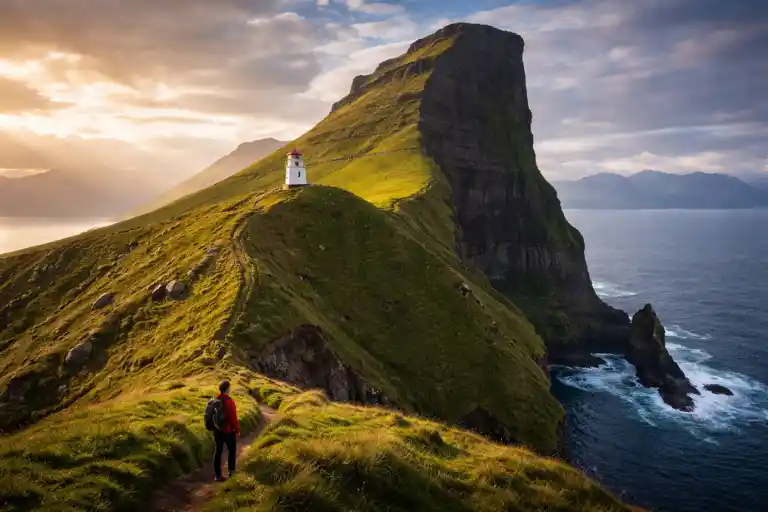
Another incredible destination is Kalsoy Island, known for the iconic Kallur Lighthouse hike. This short but dramatic trail leads to one of the most photographed viewpoints in the Faroe Islands, where cliffs and ocean views stretch in every direction.
Streymoy Island, the largest island in the Faroe Islands, also offers several beautiful hiking routes. Trails such as the Saksun to Tjørnuvík coastal hike pass through scenic valleys and traditional villages, making it one of the most memorable Faroe Islands coastal hikes.
On Eysturoy Island, hikers can climb Slættaratindur, the highest mountain in the Faroe Islands. This hike is famous for its panoramic views of the surrounding islands and is considered one of the most rewarding Faroe Islands mountain hikes.
Finally, the remote island of Mykines is famous for its puffin colony and coastal hiking trails. The Mykines hike is one of the most scenic hikes in the Faroe Islands, where travelers can walk along dramatic cliffs while spotting seabirds and breathtaking ocean landscapes.
Together, these islands form the heart of Faroe Islands trekking routes, offering some of the most unforgettable hiking spots in the Faroe Islands for nature lovers and adventure travelers.
Quick List of the Best Hikes in the Faroe Islands
If you are planning a Faroe Islands hiking adventure, it helps to start with a quick overview of the most famous trails. The best hikes in the Faroe Islands offer dramatic ocean views, towering cliffs, and unforgettable landscapes. From easy coastal walks to challenging mountain climbs, these Faroe Islands hiking trails showcase the incredible natural beauty of the islands.
Below is a quick list of some of the most scenic hikes in the Faroe Islands that travelers should consider adding to their itinerary.
- Kallur Lighthouse Hike (Kalsoy Island) – One of the most iconic Faroe Islands cliff hikes, famous for its dramatic lighthouse viewpoint and stunning ocean cliffs.
- Lake Sørvágsvatn Hike (Vágar Island) – A unique trail leading to the famous “lake above the ocean,” one of the most photographed Faroe Islands scenic hikes.
- Drangarnir Sea Arch Hike (Vágar Island) – A spectacular coastal route leading to a massive sea arch rising from the Atlantic Ocean.
- Slættaratindur Mountain Hike (Eysturoy Island) – The highest peak in the Faroe Islands and one of the most rewarding Faroe Islands mountain hikes.
- Saksun to Tjørnuvík Hike (Streymoy Island) – A beautiful coastal hiking route connecting two charming villages through dramatic valleys.
- Mykines Puffin Hike (Mykines Island) – A scenic trail where hikers can walk along cliffs while spotting puffins and seabirds.
- Trælanípa Cliff Hike (Vágar Island) – A famous viewpoint hike offering incredible views of Lake Sørvágsvatn and the Atlantic Ocean.
- Klakkur Mountain Hike (Borðoy Island) – One of the best hidden hikes in the Faroe Islands, known for panoramic views of surrounding islands.
These top hiking trails in the Faroe Islands provide a perfect mix of coastal scenery, mountain landscapes, and unforgettable viewpoints. Whether you prefer easy hikes in the Faroe Islands or more challenging trekking routes, these trails highlight the best of the Faroe Islands’ outdoor adventure.
Quick Comparison Table of the Best Faroe Islands Hikes
To help travelers choose the right trail, the table below compares some of the most popular Faroe Islands hiking routes. This overview includes important details such as distance, difficulty level, and trail highlights, making it easier to plan your Faroe Islands trekking experience.
| Hike Name | Island | Distance | Difficulty | Highlights |
| Kallur Lighthouse Hike | Kalsoy | 2 km | Easy | Dramatic sea cliffs and lighthouse views |
| Lake Sørvágsvatn Hike | Vágar | 3 km | Easy | Famous “lake above the ocean” optical illusion |
| Drangarnir Sea Arch Hike | Vágar | 7 km | Moderate | Massive sea arch rising from the Atlantic |
| Slættaratindur Hike | Eysturoy | 6 km | Moderate | Highest mountain with panoramic island views |
| Saksun to Tjørnuvík Hike | Streymoy | 7 km | Moderate | Scenic valley trail connecting two villages |
| Mykines Puffin Hike | Mykines | 4 km | Easy | Puffin colonies and dramatic coastal cliffs |
| Trælanípa Cliff Hike | Vágar | 3 km | Easy | Stunning viewpoint over Lake Sørvágsvatn |
| Klakkur Mountain Hike | Borðoy | 3 km | Easy | Panoramic views of the surrounding islands |
This quick comparison helps travelers understand which hikes in the Faroe Islands best match their interests and fitness level. Whether you are looking for scenic coastal hikes, mountain trekking routes, or beginner-friendly trails, these hikes represent some of the most unforgettable Faroe Islands nature trails.
The 10 Best Hikes in the Faroe Islands
The Faroe Islands offer some of the most breathtaking hiking trails in Europe, with dramatic sea cliffs, green valleys, and panoramic mountain views. Whether you enjoy easy coastal walks or more challenging Faroe Islands mountain hikes, these trails showcase the incredible beauty of the islands. Below are the best hikes in the Faroe Islands, each offering a unique landscape and unforgettable experience for hikers.
Kallur Lighthouse Hike (Kalsoy Island)
The Kallur Lighthouse hike is one of the most famous Faroe Islands cliff hikes and one of the most photographed viewpoints in the country. This short but spectacular trail leads to a lighthouse perched on dramatic cliffs overlooking the Atlantic Ocean.
Distance: 2 km round trip
Hiking Time: 1–2 hours
Difficulty: Easy
Elevation: ~200 meters
Highlight: Stunning panoramic views of steep sea cliffs and the surrounding islands.
This trail is considered one of the top hiking spots in the Faroe Islands and is perfect for travelers looking for a short yet unforgettable hike.
Lake Sørvágsvatn – The Lake Above the Ocean Hike
The Lake Sørvágsvatn hike is one of the most unique Faroe Islands hiking trails. The lake appears to float above the ocean due to a famous optical illusion, making it one of the most photographed landscapes in the islands.
Distance: 3 km round trip
Hiking Time: 1–2 hours
Difficulty: Easy
Elevation: ~100 meters
Highlight: The famous “lake above the ocean” viewpoint overlooking the Atlantic.
This trail is one of the most iconic scenic hikes in the Faroe Islands and is accessible for most hikers.
Drangarnir Sea Arch Hike
The Drangarnir hike is one of the most dramatic Faroe Islands coastal hikes, leading to a massive sea arch rising from the Atlantic Ocean. The trail follows grassy coastal cliffs and offers incredible views throughout the hike.
Distance: 7 km round trip
Hiking Time: 3–4 hours
Difficulty: Moderate
Elevation: ~300 meters
Highlight: A giant sea arch and rugged ocean cliffs.
This hike is a must-see for travelers looking for spectacular Faroe Islands trekking routes.
Slættaratindur – The Highest Mountain in the Faroe Islands
At 880 meters, Slættaratindur is the highest peak in the Faroe Islands and one of the most rewarding Faroe Islands mountain hikes. From the summit, hikers can enjoy panoramic views of multiple islands.
Distance: 6 km round trip
Hiking Time: 2–3 hours
Difficulty: Moderate
Elevation: 880 meters
Highlight: Incredible views across the entire Faroe Islands.
This hike is perfect for adventurers looking to experience one of the most scenic Faroe Islands hiking routes.
Saksun to Tjørnuvík Coastal Hike
This beautiful trail connects the villages of Saksun and Tjørnuvík and is one of the most scenic Faroe Islands coastal hiking routes. The path follows grassy hills, mountain ridges, and dramatic valleys.
Distance: 7 km one way
Hiking Time: 3–4 hours
Difficulty: Moderate
Elevation: ~400 meters
Highlight: Stunning views of valleys, waterfalls, and ocean cliffs.
It is one of the most rewarding nature trails in the Faroe Islands.
Mykines Puffin Trail
The Mykines hike is famous for its puffin colonies and dramatic ocean cliffs. This trail leads to the iconic Mykines lighthouse while offering some of the most scenic Faroe Islands hikes.
Distance: 4 km round trip
Hiking Time: 2 hours
Difficulty: Easy
Elevation: ~150 meters
Highlight: Puffin sightings and breathtaking coastal views.
This is one of the best wildlife hiking experiences in the Faroe Islands.
Trælanípa Cliff Hike
The Trælanípa hike offers one of the most dramatic viewpoints in the Faroe Islands. The trail leads to a cliff where visitors can see Lake Sørvágsvatn appearing to float above the ocean.
Distance: 3 km round trip
Hiking Time: 1–2 hours
Difficulty: Easy
Elevation: ~120 meters
Highlight: One of the most famous viewpoints in the Faroe Islands.
This trail is one of the most popular Faroe Islands scenic hikes.
Hvannhagi Valley Hike
The Hvannhagi hike is a hidden gem located on Suðuroy Island. This scenic trail leads hikers into a peaceful valley surrounded by cliffs and dramatic ocean views.
Distance: 5 km round trip
Hiking Time: 2–3 hours
Difficulty: Moderate
Elevation: ~250 meters
Highlight: A secluded valley with lakes and coastal scenery.
This trail is one of the best hidden hikes in the Faroe Islands.
Klakkur Mountain Hike
The Klakkur hike is a short but spectacular Faroe Islands mountain hike located near the town of Klaksvík. The summit offers panoramic views of the surrounding islands and fjords.
Distance: 3 km round trip
Hiking Time: 1–2 hours
Difficulty: Easy
Elevation: ~300 meters
Highlight: Panoramic views over multiple islands.
This is one of the most underrated Faroe Islands hiking routes.
Enniberg Sea Cliffs Hike
The Enniberg hike leads to one of the tallest sea cliffs in Europe. This challenging trail offers dramatic views of the North Atlantic and rugged coastal landscapes.
Distance: 7 km round trip
Hiking Time: 4–5 hours
Difficulty: Difficult
Elevation: ~750 meters
Highlight: One of the highest sea cliffs in Europe.
This trail is perfect for experienced hikers looking for a challenging Faroe Islands trekking adventure.
Hidden Hiking Trails Most Tourists Miss
While the famous hikes in the Faroe Islands attract most visitors, many lesser-known trails offer equally stunning scenery without crowds. Exploring these hidden hiking trails in the Faroe Islands allows travelers to experience remote landscapes and untouched nature.
One hidden gem is Svínoy Island, a quiet island known for its peaceful atmosphere and scenic Faroe Islands nature trails. Hiking here feels like stepping back in time, with remote villages and dramatic ocean cliffs.
Another underrated destination is Fugloy Island, home to some of the most dramatic coastal cliffs in the Faroe Islands. The hiking routes here offer spectacular views of the Atlantic Ocean and surrounding islands.
Travelers can also explore remote village trails across smaller islands where traditional paths connect villages, valleys, and coastal cliffs. These routes provide a unique way to experience authentic Faroe Islands outdoor adventure while avoiding busy tourist areas. For hikers seeking solitude and raw natural beauty, these hidden trails reveal a different side of Faroe Islands trekking routes that many travelers never discover.
Best Easy Hikes in the Faroe Islands for Beginners

Not every trail in the Faroe Islands requires advanced hiking skills. In fact, many easy hikes in the Faroe Islands are perfect for beginners, casual travelers, or anyone who simply wants to enjoy the landscapes without a long or difficult trek. These beginner-friendly Faroe Islands hiking trails usually have shorter distances, gentle elevation, and well-marked paths.
One of the most popular beginner hikes is the Lake Sørvágsvatn hike on Vágar Island. This scenic trail leads to the famous viewpoint where the lake appears to float above the ocean. The path is relatively flat, making it one of the best easy scenic hikes in the Faroe Islands.
Another great option is the Kallur Lighthouse hike on Kalsoy Island. Although the trail climbs slightly uphill, it is short and manageable for most hikers. The reward at the top is an unforgettable view of dramatic Faroe Islands sea cliffs and the Atlantic Ocean.
The Trælanípa cliff hike is another beginner-friendly trail that offers incredible views of Lake Sørvágsvatn and the surrounding coastline. Because the distance is short and the path is easy to follow, this trail is one of the most accessible Faroe Islands coastal hikes.
For travelers new to hiking, these beginner hikes in the Faroe Islands provide an excellent introduction to the islands’ natural beauty while keeping the adventure comfortable and enjoyable.
Most Challenging Hikes in the Faroe Islands
While there are many easy trails, some Faroe Islands hiking routes are much more challenging and best suited for experienced hikers. These advanced routes often involve steep climbs, longer distances, and rugged terrain. However, they also reward hikers with some of the most breathtaking views in the North Atlantic.
One of the most famous challenging hikes in the Faroe Islands is the Enniberg Sea Cliffs hike. Enniberg is one of the tallest sea cliffs in Europe, and the hike to its summit requires strong navigation skills and good physical fitness. The dramatic views of the ocean and cliffs make it one of the most rewarding Faroe Islands trekking adventures.
Another demanding trail is the Slættaratindur hike, which leads to the highest mountain in the Faroe Islands. Although the route is relatively short, the steep climb and high elevation make it a more demanding Faroe Islands mountain hike.
The Drangarnir sea arch hike can also be challenging depending on weather conditions. The trail follows rugged coastal terrain and may require a guide in some seasons. However, the view of the massive sea arch rising from the Atlantic makes this one of the most spectacular Faroe Islands coastal trekking routes. For hikers looking for adventure, these routes represent some of the most exciting advanced hikes in the Faroe Islands.
Best Hikes for Photography in the Faroe Islands
The Faroe Islands are a paradise for photographers. With dramatic landscapes, towering cliffs, and constantly changing weather, every hike offers a chance to capture incredible scenery. Some of the best Faroe Islands hiking trails are especially famous for photography, particularly during sunrise and sunset.
One of the most iconic sunrise hikes in the Faroe Islands is the Kallur Lighthouse hike on Kalsoy Island. Early in the morning, golden sunlight illuminates the cliffs and lighthouse, creating one of the most breathtaking views in the islands.
The Lake Sørvágsvatn hike is another must for photographers. The famous “lake above the ocean” illusion creates a unique perspective that attracts photographers from around the world. The viewpoint at Trælanípa cliffs offers one of the most recognizable landscapes in the Faroe Islands.
For sunset photography, the Klakkur mountain hike is an excellent choice. From the summit, hikers can watch the sun set behind the surrounding islands, creating dramatic lighting across the ocean and fjords.
Many Faroe Islands cliff hikes also offer incredible opportunities to photograph rugged coastal landscapes. Trails like Drangarnir and Mykines Island feature steep cliffs, crashing waves, and seabird colonies that create stunning photography scenes.
For travelers interested in capturing nature, these trails represent some of the most photogenic hikes in the Faroe Islands.
Best Islands for Hiking in the Faroe Islands
The Faroe Islands consist of 18 islands, each offering its own landscapes and unique hiking opportunities. Some islands are especially famous for their hiking trails, making them ideal destinations for outdoor adventure.
Vágar Island
Vágar Island is one of the most visited hiking destinations in the Faroe Islands because it is home to the main airport and several iconic trails. Some of the most famous hikes in the Faroe Islands are located here, including the Lake Sørvágsvatn hike, the Trælanípa cliff hike, and the spectacular Drangarnir sea arch hike.
The island combines dramatic cliffs, lakes, and ocean views, making it one of the best places for scenic coastal hikes in the Faroe Islands.
Kalsoy Island
Kalsoy Island is known for one of the most famous viewpoints in the Faroe Islands — the Kallur Lighthouse. The Kallur Lighthouse hike is short but incredibly scenic, offering panoramic views of steep cliffs and surrounding islands. Because of its rugged terrain and dramatic landscapes, Kalsoy is one of the most memorable Faroe Islands island hikes.
Streymoy Island
Streymoy Island is the largest island in the Faroe Islands and home to the capital city, Tórshavn. It also features several scenic Faroe Islands trekking routes, including the famous Saksun to Tjørnuvík coastal hike.
This island offers a mix of valleys, waterfalls, and traditional villages, making it one of the most diverse Faroe Islands hiking destinations.
Eysturoy Island
Eysturoy Island is best known for Slættaratindur, the highest mountain in the Faroe Islands. The Slættaratindur hike attracts many hikers who want to experience panoramic views across the entire archipelago.
Because of its mountains and rugged terrain, Eysturoy is ideal for those seeking Faroe Islands mountain hikes.
Mykines Island
Mykines Island is famous for its wildlife and dramatic coastal scenery. The Mykines puffin trail is one of the most unique Faroe Islands hiking experiences, allowing visitors to walk along cliffs while observing thousands of seabirds. For travelers interested in wildlife and coastal landscapes, Mykines offers one of the most unforgettable Faroe Islands nature hikes.
Best Time of Year for Hiking in the Faroe Islands
The best time for hiking in the Faroe Islands is typically during the summer months from June to August. During this period, the islands experience milder temperatures, longer daylight hours, and generally more stable weather. These conditions make it easier to explore the many Faroe Islands hiking trails spread across the islands.
One of the biggest advantages of summer hiking in the Faroe Islands is the long daylight hours. In June, the sun rises very early and sets late, providing up to 18–20 hours of daylight. This gives hikers plenty of time to explore scenic routes such as the Lake Sørvágsvatn hike, the Kallur Lighthouse hike, and other popular Faroe Islands trekking routes without feeling rushed.
Summer also offers the best conditions for enjoying coastal hikes in the Faroe Islands. The green landscapes are at their most vibrant, and wildlife such as puffins can often be seen along trails like the Mykines Puffin Trail.
However, it is important to remember that the Faroe Islands’ weather patterns can change quickly throughout the year. Even in summer, hikers may experience sunshine, fog, wind, and rain all in the same day. Because of these unpredictable conditions, travelers should always prepare properly before exploring the many hikes in the Faroe Islands.
Weather Challenges When Hiking in the Faroe Islands
While the Faroe Islands hiking experience is incredibly rewarding, hikers should be aware of several weather challenges that are common across the islands. The North Atlantic climate can change rapidly, so preparation is essential for a safe Faroe Islands outdoor adventure.
One of the most common challenges is fog. Thick fog can appear quickly, especially near mountain peaks and coastal cliffs. This can reduce visibility and make navigation difficult on certain Faroe Islands hiking routes, particularly in remote areas.
Another major factor is strong wind. Because the islands are located in the middle of the Atlantic Ocean, the wind can be powerful and unpredictable. On exposed trails such as the Drangarnir sea arch hike or the Kallur Lighthouse hike, strong wind can make walking near cliffs more challenging.
Rain is also frequent in the Faroe Islands. Sudden showers can occur even during summer months, so hikers should always bring waterproof gear when exploring Faroe Islands nature trails.
Rain and moisture can also create slippery trails, especially on grassy slopes and rocky paths. Many Faroe Islands coastal hikes pass over wet terrain where extra caution is needed.
Understanding these weather challenges is an important part of safe hiking. Being prepared helps ensure that your Faroe Islands hiking adventure remains enjoyable and safe.
Faroe Islands Hiking Difficulty and Trail Conditions
The difficulty of hikes in the Faroe Islands varies widely depending on the trail. Some routes are short and beginner-friendly, while others involve steep climbs and rugged landscapes. Understanding the typical Faroe Islands hiking conditions can help travelers choose the right trail for their skill level.
One common feature of many Faroe Islands hiking trails is steep terrain. Because the islands are mountainous, many trails climb sharply from coastal villages up to high ridges and cliffs. Routes like the Slættaratindur mountain hike require hikers to navigate steep slopes and uneven ground.
Another challenge hikers may encounter is muddy paths. Due to frequent rain and moist soil, many Faroe Islands trekking routes pass through grassy areas that can become muddy, especially after rainfall. Good hiking boots are essential for these conditions.
Hikers should also be aware of cliff exposure on certain trails. Many of the most scenic Faroe Islands cliff hikes follow narrow ridges overlooking the Atlantic Ocean. Trails like the Kallur Lighthouse hike and the Trælanípa cliff hike offer incredible views but require careful footing and attention to safety.
Despite these challenges, the variety of Faroe Islands hiking trails means there are routes suitable for beginners as well as experienced adventurers. By choosing trails that match your experience level, you can safely enjoy some of the most spectacular hiking landscapes in Europe.
Essential Hiking Tips for the Faroe Islands
Exploring the hikes in the Faroe Islands can be an unforgettable adventure, but proper preparation is important. Because the islands have rugged terrain and rapidly changing weather, following a few essential hiking tips can help ensure a safe and enjoyable Faroe Islands hiking experience.
One of the most important things to consider is navigation. While many Faroe Islands hiking trails are well-known, some routes pass through remote areas or open landscapes without clear signs. Using a GPS device, hiking app, or physical map can help you stay on the correct trail. It is also helpful to research the route before starting your Faroe Islands trekking route.
Another key factor is safety awareness. Many Faroe Islands cliff hikes lead to dramatic viewpoints overlooking the Atlantic Ocean. While the scenery is breathtaking, hikers should always stay a safe distance from cliff edges and avoid risky areas during strong winds or poor visibility.
Equally important is weather awareness. The Faroe Islands’ weather can change quickly, even during summer. Hikers may experience sunshine, rain, fog, and wind all in a single day. Before starting any Faroe Islands hiking adventure, check the weather forecast and be prepared with proper gear.
By planning carefully and respecting nature, travelers can safely enjoy some of the most beautiful scenic hikes in the Faroe Islands.
Faroe Islands Hiking Packing List
Packing the right gear is essential for a comfortable and safe Faroe Islands hiking trip. Because the islands have unpredictable weather and rugged landscapes, hikers should always bring equipment suitable for changing conditions. A well-prepared packing list can make a big difference when exploring the Faroe Islands hiking trails.
One of the most important items is a waterproof jacket. Sudden rain showers are common in the North Atlantic climate, so waterproof clothing helps keep you dry during your Faroe Islands outdoor adventure.
A pair of sturdy hiking boots is also essential. Many Faroe Islands trekking routes pass through muddy paths, grassy hills, and uneven terrain. Proper footwear provides better grip and stability on slippery trails.
For navigation, it is helpful to carry a GPS device or hiking map, especially when exploring remote Faroe Islands nature trails. While some trails are easy to follow, others may not have clear signs.
Hikers should also pack snacks and energy food to stay fueled during longer hikes. Trails like the Drangarnir sea arch hike or the Slættaratindur mountain hike can take several hours to complete.
Finally, always bring a water bottle to stay hydrated while exploring the many hiking spots in the Faroe Islands.
Other useful items include:
- Warm layers for changing weather
- sunscreen and sunglasses
- a small first-aid kit
- a camera for scenic viewpoints
Having the right equipment ensures that your Faroe Islands hiking adventure is both safe and enjoyable.
Costs of Hiking in the Faroe Islands
Many travelers assume that all hikes in the Faroe Islands are completely free, but in recent years, some trails have introduced small fees to support conservation and local communities. Understanding these costs can help travelers better plan their Faroe Islands hiking trip.
One cost hikers may encounter is paid hiking trails. Certain popular routes now require a small entrance fee, especially those located on private land. For example, some famous Faroe Islands coastal hikes have introduced fees to maintain trails and protect natural areas.
Another potential expense is parking fees near popular hiking spots. At well-known locations such as the Lake Sørvágsvatn hike or the Trælanípa viewpoint, visitors may need to pay for parking close to the trailhead.
Travelers should also consider ferry transportation costs when exploring different islands. Some of the most scenic Faroe Islands island hikes, such as the Mykines puffin trail or the Kallur Lighthouse hike on Kalsoy Island, require a ferry ride to reach the island.
Although there may be small fees, most Faroe Islands hiking routes remain affordable compared to other European destinations. The stunning landscapes, dramatic cliffs, and unforgettable views make every hike well worth the cost for travelers seeking a unique Faroe Islands outdoor adventure.
Important Hiking Rules and Local Etiquette
When exploring the hikes in the Faroe Islands, it is important to respect local traditions, land ownership, and the natural environment. Many Faroe Islands hiking trails pass through farmland, small villages, and protected landscapes, so understanding the local etiquette helps preserve these beautiful places for future visitors.
One common feature you will encounter on the Faroe Islands trekking routes is sheep gates. Sheep roam freely across the islands, and fences are often used to control where they graze. When passing through a gate on a trail, always close the gate behind you to prevent sheep from escaping into other areas.
Another important rule involves private land access. Some Faroe Islands coastal hikes and mountain trails cross private farmland. In most cases, hikers are allowed to pass through, but it is important to follow marked paths and respect signs. If a trail requires permission or a small fee, visitors should follow the instructions provided by local landowners.
Respecting nature is also essential when hiking in the Faroe Islands. Travelers should stay on designated Faroe Islands nature trails, avoid disturbing wildlife, and never leave trash behind. The islands are known for their untouched landscapes, and responsible hiking helps protect these fragile ecosystems.
By following these simple guidelines, visitors can enjoy the incredible Faroe Islands hiking experience while supporting local communities and preserving the natural beauty of the islands.
Do You Need a Guide to Hike in the Faroe Islands
Many of the most popular hikes in the Faroe Islands can be completed independently, especially well-known routes such as the Lake Sørvágsvatn hike, the Kallur Lighthouse hike, and other established Faroe Islands hiking trails. These routes are generally easy to follow and attract many visitors during the summer season.
However, there are situations where hiring a guide can be helpful or even required. Some Faroe Islands trekking routes cross private land where local guides manage access to protect the environment and ensure visitor safety. Trails such as the Drangarnir sea arch hike may require a guided tour depending on local regulations.
A guide can also be useful for more challenging Faroe Islands mountain hikes, especially in remote areas with steep terrain or limited trail markings. Experienced guides provide valuable knowledge about the landscape, weather conditions, and local history.
For beginners or travelers unfamiliar with the islands, joining a guided hike can also make the Faroe Islands’ outdoor adventure more comfortable and informative. However, experienced hikers who research routes carefully can often explore many of the Faroe Islands’ hiking spots on their own.
Common Mistakes Tourists Make When Hiking in the Faroe Islands
The Faroe Islands are a beautiful but rugged destination, and many visitors underestimate the challenges of hiking here. Avoiding a few common mistakes can help ensure a safer and more enjoyable Faroe Islands hiking adventure.
One of the biggest mistakes hikers make is ignoring the weather. The Faroe Islands climate can change rapidly, even during summer. Sunshine can quickly turn into fog, wind, or rain, which may affect visibility and trail conditions on many Faroe Islands hiking routes.
Another common mistake is wearing poor footwear. Many Faroe Islands nature trails pass through muddy grass, rocky slopes, or wet terrain. Without proper hiking boots, these conditions can become slippery and uncomfortable.
Some travelers also make the mistake of underestimating distances. Even short Faroe Islands coastal hikes may take longer than expected due to steep terrain or strong winds. Trails such as the Drangarnir sea arch hike or the Slættaratindur mountain hike require more time and energy than they might appear on a map.
By preparing properly and understanding the terrain, hikers can fully enjoy the incredible Faroe Islands trekking experience.
Sample 3–5 Day Faroe Islands Hiking Itinerary
Planning a short itinerary is one of the best ways to experience the most scenic hikes in the Faroe Islands. Because the islands are connected by tunnels, bridges, and ferries, travelers can easily explore several Faroe Islands hiking destinations in just a few days.
Day 1 – Vágar Island Hikes
Start your adventure on Vágar Island, home to some of the most famous Faroe Islands hiking trails. Begin with the Lake Sørvágsvatn hike, where you can see the famous lake that appears to float above the ocean. Afterward, visit the nearby Trælanípa cliff viewpoint for dramatic views of the Atlantic coastline.
If time allows, you can also explore the Drangarnir sea arch hike, one of the most spectacular Faroe Islands coastal hikes.
Day 2 – Kalsoy Island Adventure
On the second day, take a ferry to Kalsoy Island to complete the iconic Kallur Lighthouse hike. This short trail leads to one of the most famous viewpoints in the Faroe Islands, where steep cliffs drop into the ocean on both sides.
This hike is considered one of the most memorable Faroe Islands cliff hikes and is a highlight for many travelers.
Day 3 – Streymoy Coastal Hike
Spend the third day exploring Streymoy Island, the largest island in the Faroe Islands. One of the best trails here is the Saksun to Tjørnuvík coastal hike, which connects two traditional villages through scenic valleys and mountain ridges.
This route offers one of the most beautiful Faroe Islands trekking routes, with views of waterfalls, ocean cliffs, and dramatic landscapes.
Optional Day 4–5 – Island Exploration
If you have extra time, consider visiting Eysturoy Island to hike Slættaratindur, the highest mountain in the Faroe Islands. Another excellent option is traveling to Mykines Island to complete the Mykines puffin trail, one of the most scenic Faroe Islands nature hikes.
This short itinerary allows travelers to experience a variety of Faroe Islands hiking trails, from dramatic cliffs and mountain summits to peaceful coastal valleys.
Frequently Asked Questions About Hiking in the Faroe Islands
Many travelers planning a Faroe Islands hiking adventure have similar questions before visiting. Below are some common questions about hikes in the Faroe Islands to help you prepare for your trip.
Is hiking in the Faroe Islands safe?
Yes, hiking in the Faroe Islands is generally safe, especially on popular Faroe Islands hiking trails such as the Lake Sørvágsvatn hike, Kallur Lighthouse hike, and Saksun to Tjørnuvík coastal hike. However, hikers should always be careful near cliffs, check the weather forecast, and wear proper hiking gear. Because the Faroe Islands’ weather can change quickly, preparation and awareness are important for a safe hiking experience.
Are the hikes in the Faroe Islands difficult?
The difficulty of the Faroe Islands hiking routes varies depending on the trail. Some hikes are short and beginner-friendly, while others involve steep climbs and rugged terrain. Trails like the Trælanípa cliff hike and Lake Sørvágsvatn hike are considered easy hikes in the Faroe Islands, while routes such as the Slættaratindur mountain hike or the Enniberg sea cliffs hike are more challenging.
What is the best hike in the Faroe Islands?
There are many incredible hikes in the Faroe Islands, but a few stand out as favorites among travelers. The Kallur Lighthouse hike is famous for its dramatic sea cliffs, while the Lake Sørvágsvatn hike offers the unique “lake above the ocean” illusion. The Drangarnir sea arch hike is another unforgettable trail known for its rugged coastal scenery. Each of these trails represents some of the most scenic Faroe Islands hiking spots.
Do you need hiking permits in the Faroe Islands?
Most Faroe Islands hiking trails are free to access, but some routes may require a small fee or permission if they cross private land. In certain cases, popular trails like the Drangarnir hike may require a guide depending on local regulations. These rules help protect the environment and support local communities that maintain the trails.
Final Thoughts on Hiking in the Faroe Islands
The Faroe Islands offer some of the most breathtaking hiking landscapes in Europe. With dramatic cliffs, green mountains, remote villages, and endless ocean views, the islands provide an unforgettable experience for nature lovers and adventure travelers.
From iconic routes like the Kallur Lighthouse hike and the Lake Sørvágsvatn hike to hidden Faroe Islands nature trails across remote islands, every trail reveals a new perspective of this unique destination. Whether you prefer easy coastal walks, challenging mountain climbs, or peaceful scenic routes, there are countless Faroe Islands hiking trails waiting to be explored.
With proper preparation, respect for local nature, and a sense of adventure, hiking here can become one of the most memorable travel experiences in Europe. For anyone seeking dramatic landscapes and unforgettable outdoor adventures, discovering the best hikes in the Faroe Islands is truly a journey worth taking.