The Faroe Islands waterfalls are among the most breathtaking natural sights in the North Atlantic. These remote islands, situated between Iceland and Norway, are renowned for their dramatic cliffs, lush valleys, and powerful waterfalls that often cascade directly into the ocean. Because of the islands’ rainy climate and steep landscapes, you will find dozens of waterfalls in the Faroe Islands, many of which are easy to visit by car or short hikes.
From the iconic Múlafossur Waterfall in Gásadalur to the towering Fossá Waterfall, the best waterfalls in the Faroe Islands offer unforgettable views for travelers and photographers alike. Some waterfalls sit beside quiet villages, while others appear along scenic hiking trails near places like Sørvágsvatn Lake.
In this Faroe Islands waterfall travel guide, you will discover the most beautiful waterfalls, where to find them, the best time to visit, and helpful tips for planning a memorable trip.
Quick List of the Best Faroe Islands Waterfalls
The Faroe Islands waterfalls are scattered across dramatic cliffs, green valleys, and coastal villages. Many of them are easy to reach, while others require a short hike through the islands’ rugged landscapes. If you are planning a trip, this quick list highlights some of the best waterfalls in the Faroe Islands that travelers and photographers love to visit.
- Múlafossur Waterfall – The most famous Gasadalur waterfall, dramatically falling into the Atlantic Ocean.
- Fossá Waterfall – The tallest waterfall in the Faroe Islands, located on Streymoy Island and visible from the road.
- Bøsdalafossur Waterfall – A beautiful waterfall reached by hiking near Sørvágsvatn Lake, one of the most scenic spots in the islands.
- Svartafoss Waterfall – A peaceful waterfall surrounded by dramatic cliffs and quiet nature.
- Saksun Waterfalls – Small but charming waterfalls near the village of Saksun, known for its stunning lagoon views.
- Tjørnuvík Waterfalls – Scenic coastal waterfalls located near the picturesque village of Tjørnuvík.
These famous waterfalls in the Faroe Islands showcase the raw beauty of the islands and are must-visit locations for anyone exploring this unique destination.
Why the Faroe Islands Have So Many Waterfalls
One reason the Faroe Islands waterfalls are so abundant is the region’s wet climate in the North Atlantic. The islands receive frequent rain and mist throughout the year, which constantly feeds rivers and streams flowing down the mountains. Because of this steady rainfall, many waterfalls in the Faroe Islands remain active in every season.
Another important factor is the islands’ steep cliffs and deep valleys. The rugged landscape causes water to rush down dramatic slopes, creating hundreds of small and large falls across the islands. Some streams travel only a short distance before dropping suddenly from high cliffs.
A unique feature of the Faroe Islands’ waterfall landscape is that several waterfalls fall directly into the Atlantic Ocean. Famous examples like Múlafossur Waterfall near Gásadalur show how water plunges from cliffs straight into the sea. This special geography is what makes the best waterfalls in the Faroe Islands so striking and unforgettable.
Map of the Best Faroe Islands Waterfalls

You might also like: Charleston Girls Weekend
When planning a trip to see the Faroe Islands’ waterfalls, it helps to understand where the main waterfalls are located. The islands are connected by tunnels and scenic roads, making it possible to visit several waterfalls in the Faroe Islands during a short road trip.
Many of the best waterfalls in the Faroe Islands are spread across islands such as Vágar, Streymoy, and Eysturoy. For example, Múlafossur Waterfall sits near the village of Gásadalur on Vágar Island, while Fossá Waterfall is located along the coastal road on Streymoy Island. Another famous site, Bøsdalafossur Waterfall, can be reached by hiking near Sørvágsvatn Lake.
Driving between these waterfalls is usually simple. A typical route may start near Vágar Airport, continue toward Gásadalur, then cross to Streymoy Island to see Fossá and the beautiful Saksun waterfalls. Because distances are short, travelers can easily visit several famous waterfalls in the Faroe Islands in a single day.
Most Famous Waterfalls in the Faroe Islands
The Faroe Islands’ waterfall landscape is filled with dramatic cliffs, coastal villages, and powerful streams of water. Below are some of the most famous waterfalls in the Faroe Islands, each offering unique scenery and unforgettable views.
Múlafossur Waterfall (Gásadalur)
Location:
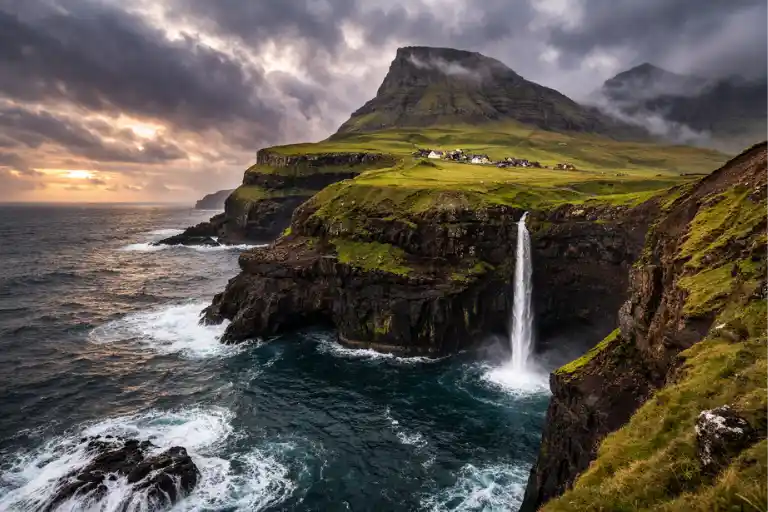
Múlafossur Waterfall is located in the small village of Gásadalur on Vágar Island. It is one of the most photographed Faroe Islands waterfalls because it drops directly into the Atlantic Ocean.
Height:
The waterfall falls about 60 meters (200 feet) from the cliffs into the sea.
Best viewpoints:
The best views come from the clifftop viewpoint near the village. From here, you can see the waterfall, the ocean, and the colorful houses of Gásadalur together.
Photography tips:
Visit during sunset or early morning when the light highlights the cliffs and ocean mist. Calm weather often creates the most dramatic photos of this iconic Gasadalur waterfall.
Fossá Waterfall (Tallest Waterfall in the Faroe Islands)
Height:
Fossá Waterfall is the tallest waterfall in the Faroe Islands, measuring around 140 meters (459 feet). The water flows down the mountainside in two beautiful tiers.
Road access:
One of the best things about this famous waterfall in the Faroe Islands is that it sits directly beside the road on Streymoy Island, making it very easy to visit.
Best viewing spots:
Travelers can enjoy views from the roadside parking area or hike slightly higher up the slope for a closer look at the upper tier of the waterfall.
Bøsdalafossur Waterfall
Hiking route:
Reaching Bøsdalafossur Waterfall requires a scenic hike across grassy cliffs near Sørvágsvatn Lake. The walk is popular with travelers exploring the lake area.
Connection to Sørvágsvatn Lake:
The waterfall flows from Sørvágsvatn, the largest lake in the Faroe Islands, before dropping dramatically into the ocean.
Photography opportunities:
This location offers one of the most unique Faroe Islands waterfall photography spots, especially when the lake appears to hang above the sea from certain viewpoints.
Svartafoss Waterfall
Unique scenery:
Svartafoss Waterfall is surrounded by rugged cliffs and quiet landscapes, making it one of the more peaceful waterfalls in the Faroe Islands.
Hiking access:
Visitors usually reach the waterfall by following short hiking paths through the countryside, which adds to the sense of adventure.
Saksun Waterfalls
Surrounding village scenery:
The Saksun waterfalls sit near the beautiful village of Saksun, known for its grass-roof houses and dramatic lagoon surrounded by mountains.
Photography tips:
For the best photos, visit during soft daylight or misty weather, when the surrounding cliffs and village scenery create a magical atmosphere around these charming Faroe Islands waterfalls.
Faroe Islands Waterfalls by Island
The Faroe Islands waterfalls are spread across several islands, each offering different landscapes and travel experiences. Because the islands are connected by tunnels, bridges, and scenic roads, it is easy to explore multiple waterfalls in the Faroe Islands during one trip. Understanding where waterfalls are located can help travelers plan a more efficient route while discovering some of the best waterfalls in the Faroe Islands.
Vágar Island Waterfalls
Vágar Island is one of the most visited islands in the Faroe Islands because it is home to Vágar Airport and several famous natural attractions. One of the most iconic Faroe Islands waterfalls located here is Múlafossur Waterfall in the village of Gásadalur. This dramatic waterfall drops directly into the Atlantic Ocean and is considered one of the most beautiful Gasadalur waterfalls in the region.
Another notable waterfall connected to Vágar is Bøsdalafossur Waterfall, which can be reached by hiking near Sørvágsvatn Lake, the largest lake in the Faroe Islands. The hike to this waterfall is one of the most scenic experiences for visitors exploring the island.
Streymoy Island Waterfalls
Streymoy Island is the largest island in the Faroe Islands and home to the capital city, Tórshavn. This island features several impressive waterfalls in the Faroe Islands, including the famous Fossá Waterfall, the tallest waterfall in the country.
Fossá Waterfall flows down a steep mountainside and can be easily seen from the roadside, making it one of the easiest Faroe Islands waterfalls to visit. Travelers driving along the coastal road will often spot the waterfall cascading down the cliffs before reaching the ocean.
The nearby village of Saksun also offers beautiful landscapes where small streams and waterfalls flow through green valleys, creating peaceful scenery that photographers love.
Eysturoy Island Waterfalls
Eysturoy Island is known for its dramatic mountains and coastal villages. While the island is more famous for hiking and panoramic viewpoints, travelers can still find smaller but scenic waterfalls in the Faroe Islands hidden along its valleys and cliffs.
These waterfalls are often seasonal, appearing after heavy rainfall and flowing down steep slopes toward the sea. Exploring the villages and hiking trails on Eysturoy can reveal quiet and less crowded Faroe Islands waterfalls that many visitors miss.
Ocean-Falling Waterfalls – A Unique Feature of the Faroe Islands
One of the most remarkable features of the Faroe Islands’ waterfall landscape is that some waterfalls drop directly into the Atlantic Ocean. This dramatic sight happens because the islands are surrounded by high coastal cliffs where rivers and streams reach the edge of the land before plunging into the sea.
This type of waterfall is rare around the world because most waterfalls flow into rivers or lakes rather than the ocean. In the Faroe Islands, however, the combination of steep cliffs, heavy rainfall, and short rivers creates perfect conditions for ocean-falling waterfalls.
A famous example is Múlafossur Waterfall, located in the village of Gásadalur. Here, water flows from the mountains above the village and falls nearly 60 meters straight into the Atlantic Ocean. The dramatic cliffs, ocean waves, and surrounding green hills make this one of the most iconic Faroe Islands waterfalls and a favorite destination for travelers and photographers.
Waterfalls You Can See From the Road
One of the best things about exploring the Faroe Islands’ waterfalls is that many of them are easy to reach. Travelers do not always need long hikes to enjoy beautiful scenery. Several waterfalls in the Faroe Islands can be seen directly from the road, making them perfect for visitors who have limited time or prefer a relaxed trip.
Fossá Waterfall is one of the most accessible waterfalls in the Faroe Islands. Located on Streymoy Island, it sits right beside the coastal road, allowing visitors to stop and enjoy the view almost immediately. As the tallest waterfall in the Faroe Islands, Fossá is impressive even from a distance.
Another famous stop is the Múlafossur viewpoint in the village of Gásadalur. From the clifftop viewpoint, travelers can see the stunning Múlafossur Waterfall falling directly into the Atlantic Ocean. This location is considered one of the most iconic waterfall photography spots in the Faroe Islands.
The peaceful village of Saksun also offers beautiful scenery where small streams and Saksun waterfalls flow through the valley. Visitors driving into the village can easily spot these charming waterfalls surrounded by mountains and green fields.
Hidden Waterfalls in the Faroe Islands
Beyond the famous landmarks, there are many hidden waterfalls in the Faroe Islands waiting to be discovered. Because of the islands’ frequent rain and steep cliffs, new waterfalls often appear after storms or during wet seasons. These seasonal waterfalls can be seen flowing down mountain slopes and coastal cliffs across the islands.

Some lesser-known Faroe Islands waterfalls are found along quiet hiking paths or near remote villages. Exploring areas away from the main tourist routes often leads to peaceful natural spots where visitors can enjoy the landscape without crowds.
Local travelers often recommend keeping an eye on the cliffs while driving through valleys, especially after rainy weather. Many waterfalls in the Faroe Islands only appear for short periods, which makes discovering them feel like a special experience. With patience and curiosity, visitors can often find beautiful hidden waterfalls that are not listed in most travel guides.
Best Waterfalls for Hiking
For travelers who enjoy outdoor adventure, several Faroe Islands waterfalls are best reached by hiking. These trails often lead through green valleys, dramatic cliffs, and coastal landscapes, offering some of the most rewarding views in the islands.
One of the most famous hiking destinations is the trail leading to Bøsdalafossur Waterfall near Sørvágsvatn Lake. The hike follows a scenic path across grassy cliffs before reaching the dramatic waterfall where the lake water flows into the ocean. This location is one of the most unique waterfalls in the Faroe Islands.
Many cliffside trails across the islands also lead to smaller waterfalls that are rarely seen by casual visitors. These hikes allow travelers to experience quiet landscapes and discover beautiful Faroe Islands waterfalls hidden within the mountains.
Most waterfall hikes in the Faroe Islands are considered easy to moderate, but visitors should still prepare carefully. The terrain can be slippery, especially after rain, and strong winds are common along coastal cliffs. Wearing sturdy hiking shoes and checking weather conditions are important safety tips for anyone planning to explore the best hiking waterfalls in the Faroe Islands.
Best Waterfalls for Photography
The dramatic landscapes of the Faroe Islands’ waterfalls make them some of the most photogenic natural attractions in the North Atlantic. With towering cliffs, ocean views, and constantly changing weather, photographers can capture truly unique scenes at many waterfalls in the Faroe Islands.
Sunrise waterfall photography is often the best time to capture soft light and calm conditions. Early morning light creates beautiful colors on the cliffs and ocean near famous locations like Múlafossur Waterfall in Gásadalur. The quiet atmosphere at sunrise also means fewer visitors, which helps photographers capture clean landscape shots.
Sunset viewpoints can also produce stunning images. The golden evening light often highlights the green valleys and dramatic coastal cliffs surrounding the best waterfalls in the Faroe Islands, including Fossá Waterfall and the scenic landscapes near Saksun.
For photographers using drones, the Faroe Islands offer incredible drone photography locations. Aerial views of waterfalls falling from cliffs into the ocean provide a perspective that is impossible to see from the ground. However, it is important to follow local drone regulations and respect nearby villages.
The weather conditions for photos can change quickly in the Faroe Islands. Fog, rain, and moving clouds often add atmosphere to waterfall photography. Many photographers find that slightly cloudy or misty conditions create the most dramatic photos of the Faroe Islands’ waterfalls.
Faroe Islands Waterfall Road Trip Itinerary
One of the best ways to explore the Faroe Islands’ waterfalls is by taking a scenic road trip across the islands. Because the distances are short and the roads are well-connected, travelers can easily visit several famous waterfalls in the Faroe Islands in just a few days.
Day 1 – Gásadalur and Múlafossur Waterfall
Start your trip on Vágar Island, where you will find the famous Múlafossur Waterfall in the village of Gásadalur. This iconic waterfall in Gasadalur drops from high cliffs directly into the Atlantic Ocean. Spend time exploring the viewpoint near the village and capturing photos of one of the most famous Faroe Islands waterfalls.
Day 2 – Fossá Waterfall and Saksun
Drive to Streymoy Island to see the impressive Fossá Waterfall, the tallest waterfall in the Faroe Islands. Because it sits beside the road, it is one of the easiest waterfalls in the Faroe Islands to visit.
Afterward, continue to the picturesque village of Saksun, where small streams and Saksun waterfalls flow through a peaceful valley surrounded by mountains.
Day 3 – Bøsdalafossur and Sørvágsvatn Lake
Finish your trip with a hike to Bøsdalafossur Waterfall, one of the most dramatic Faroe Islands waterfalls. The trail begins near Sørvágsvatn Lake, the largest lake in the islands.
As you walk across the cliffs, you will eventually reach the waterfall where the lake water flows into the ocean. This location is one of the most breathtaking waterfall photography spots in the Faroe Islands, making it a perfect ending to a memorable Faroe Islands waterfall road trip.
Best Time to Visit the Faroe Islands Waterfalls
The Faroe Islands waterfalls can be visited throughout the year, but each season offers a different experience. Because the islands receive frequent rain, many waterfalls in the Faroe Islands remain active in every season. However, the water flow and scenery can change depending on the time of year.
Spring Waterfalls (Strong Flow)
Spring is one of the best times to see the best waterfalls in the Faroe Islands at their most powerful. Melting snow and frequent rain increase the water flow, making waterfalls like Fossá Waterfall and Múlafossur Waterfall especially dramatic. The surrounding valleys also begin turning green, creating beautiful scenery for photography.
Summer Waterfalls
Summer is the most popular travel season in the Faroe Islands. While some Faroe Islands waterfalls may have slightly less water than in spring, the long daylight hours make it easier to explore multiple waterfalls in one day. Clear skies and calmer weather also provide great opportunities for waterfall photography in the Faroe Islands.
Winter Storms and Dramatic Waterfalls
During winter, strong Atlantic storms bring heavy rain and powerful winds to the islands. These conditions often create dramatic scenes where waterfalls in the Faroe Islands appear larger and more intense. However, winter travel requires extra caution due to changing weather and slippery terrain.
Safety Tips When Visiting the Faroe Islands Waterfalls
Exploring the Faroe Islands’ waterfalls is an unforgettable experience, but visitors should always stay aware of safety conditions. The islands’ rugged landscapes and unpredictable weather mean that caution is important when visiting waterfalls in the Faroe Islands.
Slippery Cliffs
Many Faroe Islands waterfalls are located near steep cliffs and wet grass. Rain and ocean mist can make rocks and paths extremely slippery. Always stay on safe trails and avoid walking too close to cliff edges.
Rapid Weather Changes
The weather in the Faroe Islands can change quickly. A sunny morning can turn into heavy rain or fog within minutes. When visiting the best waterfalls in the Faroe Islands, it is important to bring waterproof clothing and check weather forecasts before heading out.
Hiking Safety
Some waterfalls, such as Bøsdalafossur Waterfall, require short hikes across grassy cliffs. Wear strong hiking shoes and follow marked paths whenever possible. Travelers should also avoid hiking alone in remote areas.
Drone Rules
Drone photography is popular at many Faroe Islands waterfalls, especially near scenic locations like Múlafossur Waterfall. However, drone users must respect local regulations and avoid flying near villages or disturbing wildlife.
Travel Tips for Visiting the Faroe Islands Waterfalls
Planning can make your trip to the Faroe Islands waterfalls smoother and more enjoyable. Because the islands are small but mountainous, good preparation helps travelers explore more locations safely.
Renting a Car
The best way to explore the waterfalls in the Faroe Islands is by renting a car. Many famous waterfalls, including Fossá Waterfall and Saksun waterfalls, are located along scenic driving routes.
Road Conditions
Roads in the Faroe Islands are generally well-maintained, but they often include narrow mountain roads and tunnels. Driving slowly and carefully is important when traveling between the Faroe Islands’ waterfalls.
Weather Preparation
Weather conditions can change quickly, so travelers should pack waterproof jackets, warm clothing, and sturdy shoes. Being prepared for rain will make it easier to enjoy the best waterfalls in the Faroe Islands.
Respecting Local Villages
Many famous waterfalls in the Faroe Islands are located near small villages such as Gásadalur and Saksun. Visitors should respect local communities by following parking rules, staying on paths, and keeping the environment clean.
Common Mistakes Tourists Make When Visiting Waterfalls
Visiting the Faroe Islands’ waterfalls is an unforgettable experience, but some travelers make mistakes that can affect both safety and enjoyment. Being aware of these common issues can help visitors explore the best waterfalls in the Faroe Islands more safely and responsibly.
Ignoring Weather Warnings
The weather in the Faroe Islands can change very quickly. Rain, fog, and strong winds are common, especially near coastal cliffs where many waterfalls in the Faroe Islands are located. Ignoring weather warnings can make trails slippery and reduce visibility. Checking the forecast before visiting places like Múlafossur Waterfall or Bøsdalafossur Waterfall is always a smart idea.
Standing Too Close to Cliffs
Many Faroe Islands waterfalls sit on dramatic cliffs that drop straight into the ocean. While the views are stunning, standing too close to cliff edges can be dangerous. Strong winds can appear suddenly, especially near locations like Múlafossur Waterfall in Gásadalur.
Underestimating Hiking Difficulty
Some waterfalls, such as Bøsdalafossur Waterfall near Sørvágsvatn Lake, require short hikes across uneven ground. Many visitors underestimate how slippery the terrain can become after rain. Wearing proper hiking shoes and following marked paths helps ensure a safer experience when exploring waterfalls in the Faroe Islands.
FAQs About Faroe Islands Waterfalls
What is the most famous waterfall in the Faroe Islands?
The most famous Faroe Islands waterfall is Múlafossur Waterfall, located in the village of Gásadalur on Vágar Island. The waterfall drops around 60 meters directly into the Atlantic Ocean and is one of the most photographed waterfalls in the Faroe Islands.
What is the tallest waterfall in the Faroe Islands?
Fossá Waterfall is the tallest waterfall in the Faroe Islands, reaching about 140 meters (459 feet). It is located on Streymoy Island and can be easily seen from the road.
How many waterfalls are in the Faroe Islands?
There are hundreds of waterfalls in the Faroe Islands, especially after rainfall. While only a few are famous tourist attractions, many smaller waterfalls appear across the cliffs and valleys throughout the islands.
Are Faroe Islands waterfalls easy to visit?
Yes, many Faroe Islands waterfalls are easy to reach. Some, like Fossá Waterfall, can be seen directly from the road. Others require short hikes but are still accessible for most travelers.
Can you hike to waterfalls in the Faroe Islands?
Yes, several waterfalls in the Faroe Islands can be reached by hiking. A popular example is the trail to Bøsdalafossur Waterfall, which begins near Sørvágsvatn Lake and offers spectacular views along the cliffs.
Conclusion
The Faroe Islands waterfalls are among the most beautiful natural attractions in the North Atlantic. From the dramatic ocean-falling Múlafossur Waterfall to the towering Fossá Waterfall, these landscapes show the raw power and beauty of nature. The combination of steep cliffs, frequent rain, and rugged islands creates countless waterfalls that flow through valleys and drop into the sea.
Travelers exploring the best waterfalls in the Faroe Islands will discover breathtaking viewpoints, peaceful villages, and scenic hiking trails. By visiting multiple islands such as Vágar, Streymoy, and Eysturoy, visitors can experience the full variety of waterfalls in the Faroe Islands and enjoy one of the most unique landscapes in the world.