
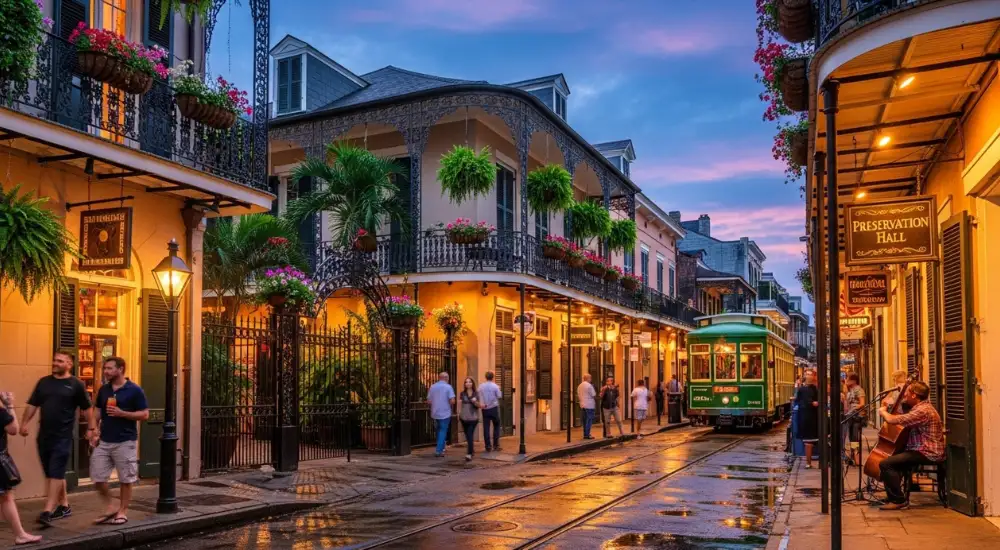
The French Quarter streets in New Orleans are among the most famous and historic in the United States. This vibrant neighborhood is known for its colorful buildings, lively music, and deep cultural roots. Every street tells a story, from the energy of Bourbon Street New Orleans to the artistic charm of Royal Street New Orleans.
Visitors come here to explore the French Quarter New Orleans historic district, walk through its narrow lanes, and experience its unique mix of Creole culture, jazz music, and street life. Whether you are planning a New Orleans walking tour or simply looking for the best streets in the French Quarter New Orleans, this area offers something unforgettable.
In this guide, you will discover famous streets, hidden gems, and a complete walking experience through one of the most iconic neighborhoods in the world.
Quick Answer:
The French Quarter streets in New Orleans are famous for their historic charm, lively culture, and walkable layout, featuring top streets like Bourbon Street, Royal Street, and Chartres Street filled with music, food, and architecture.
French Quarter Layout Explained
The French Quarter New Orleans historic district, also known as “Vieux Carré”, is the oldest and most famous neighborhood in the city. The name Vieux Carré means “Old Square” in French, which refers to its original planned layout during the French colonial period.
The area is built on a simple grid-style street system, making it easy for visitors to walk and explore. Streets run in straight lines and connect in a pattern that guides you naturally through the neighborhood. This is why the French Quarter walking tour experience feels so smooth and beginner-friendly.
There are three main walking zones you should know:
- Riverfront zone (near Decatur Street) – busy, lively, and close to the Mississippi River
- Central historic zone (Royal & Chartres Streets) – rich in architecture and culture
- Entertainment zone (Bourbon Street area) – full of nightlife and energy
For first-time visitors, the best entry points are:
- Jackson Square area – perfect starting point for sightseeing
- Canal Street entrance – connects the modern city to the historic quarter
- French Market side – great for food and local culture
All streets are closely connected, so you can easily move from Royal Street, New Orleans to Bourbon Street, New Orleans without needing transportation. This connected layout makes exploring the best streets in the French Quarter New Orleans simple and enjoyable.
Historical Background of French Quarter Streets
The French Quarter streets in New Orleans have a deep and rich history that reflects centuries of cultural change. The area began with French colonial origins, when it was first planned in the early 18th century. This is when the basic street layout and early buildings were established, forming the foundation of today’s historic district.

Later, the area came under Spanish influence, which is still visible in many of the buildings. After major fires destroyed parts of the city, Spanish-style architecture became dominant, especially with brick structures, iron balconies, and enclosed courtyards.
Over time, a unique Creole culture in New Orleans developed. This culture blended French, Spanish, African, and Caribbean influences, shaping the food, music, and lifestyle seen in the French Quarter today.
Because of its cultural and historical value, the district is carefully preserved as a protected historic landmark, ensuring that its streets, buildings, and atmosphere remain unchanged for future generations.
Most Famous Streets in the French Quarter
The French Quarter in New Orleans are known worldwide for their unique personality, culture, and energy. Each street offers a different experience, from nightlife to history and art.
Bourbon Street – The Entertainment Heart
Bourbon Street New Orleans is the most famous street in the French Quarter. It is known for its vibrant nightlife, live music, bars, and street energy. At night, the street becomes extremely lively with crowds, music, and celebrations, while during the day it is more relaxed but still active with tourists exploring.
Royal Street – Art, Music & Elegance
Royal Street New Orleans is the artistic side of the French Quarter. It is famous for art galleries, antique shops, boutique stores, and live street performers. Compared to Bourbon Street, it is quieter and more elegant, making it ideal for slow walking and cultural exploration.
Decatur Street – Local Life & Food Culture
Decatur Street New Orleans is closely connected to the French Market area. It is known for its casual cafés, local restaurants, street food, and everyday city life. This street gives visitors a more authentic local experience of the French Quarter.
Chartres Street – Historic & Quiet Beauty
Chartres Street New Orleans is one of the most historic and peaceful streets. It is filled with beautiful colonial architecture, quiet walking paths, and perfect photography spots. Visitors often come here to enjoy a calmer side of the French Quarter away from the crowds.
French Market Area Streets – Local Shopping & Culture
The French Market area streets offer a mix of shopping, food stalls, souvenirs, and cultural experiences. This part of the French Quarter is perfect for visitors who want to explore local products, try street food, and experience the daily rhythm of New Orleans culture.
Best Walking Routes Through the French Quarter
Exploring the French Quarter streets in New Orleans is best done on foot because the area is compact, walkable, and full of hidden details. These walking routes are designed for different time frames so you can experience the best streets in French Quarter New Orleans at your own pace.
1-Hour Quick Tour Route
This short route is perfect for first-time visitors with limited time.
- Starting point: Jackson Square
- Walk through Chartres Street New Orleans for historic architecture
- Move toward Royal Street New Orleans for art galleries and street music
- End near Decatur Street New Orleans at the French Market
This route gives a quick taste of history, art, and local life.
3-Hour Explorer Route
This is the most balanced walking experience for visitors.
- Starting point: Canal Street entrance
- Explore Royal Street New Orleans (art, antiques, street performers)
- Continue to Bourbon Street New Orleans (daytime energy and culture)
- Walk into Chartres Street New Orleans for quiet historic views
- Finish at French Market area streets for food and shopping
This route blends culture, history, and entertainment.
Full-Day Immersive Walking Experience
For a deep experience of the French Quarter New Orleans historic district:
- Morning: Begin at Jackson Square and explore Chartres Street New Orleans
- Afternoon: Walk through Royal Street New Orleans and visit galleries
- Lunch: Stop at Decatur Street New Orleans cafés and local food spots
- Evening: Experience the energy of Bourbon Street New Orleans
This full-day route lets you fully experience the French Quarter walking tour style journey.
What Each Street Feels Like
Each street in the French Quarter has its own personality, making the experience very diverse and memorable.
- Bourbon Street New Orleans feels loud, energetic, and full of life, especially at night with music and crowds.
- Royal Street New Orleans feels artistic, calm, and elegant, with a creative and cultural atmosphere.
- Decatur Street New Orleans feels local, casual, and lively with food and street activity.
- Chartres Street New Orleans feels peaceful, historic, and perfect for slow walking and photography.
During the day, the streets feel more relaxed and sightseeing-focused. At night, especially around Bourbon Street, the energy becomes vibrant and exciting. This contrast makes the French Quarter streets in New Orleans a unique travel experience.
Hidden Streets & Secret Alleys
Beyond the main roads, the French Quarter has many hidden streets and quiet corners that most tourists miss.
- Small alleys near Royal Street New Orleans with hidden courtyards
- Quiet side streets around Chartres Street New Orleans with historic homes
- Lesser-known walking paths near the riverfront area
- Small cafés tucked away behind main shopping streets
These hidden areas give a more authentic and peaceful view of the French Quarter New Orleans historic district, away from heavy tourist crowds.
Most Instagrammable & Scenic Spots
The French Quarter is one of the most photogenic areas in the United States, offering endless visual beauty.
- Colorful buildings and historic balconies along Royal Street New Orleans
- Street performers and live jazz scenes on Bourbon Street New Orleans
- Ironwork architecture and quiet streets on Chartres Street New Orleans
- Decorative storefronts and lively scenes near the French Market area streets
The best time for photography is early morning or late afternoon when the lighting is soft and crowds are smaller. This makes it easier to capture the charm of the French Quarter streets in New Orleans naturally.
Food, Drinks & Culture Along French Quarter Streets
The French Quarter streets in New Orleans are not only about history and walking tours—they are also a rich hub of food, music, and culture. Every street offers something unique for visitors who want to experience the local lifestyle.
One of the biggest highlights is Creole cuisine in New Orleans, which reflects a mix of French, Spanish, African, and Caribbean influences. You will find dishes like gumbo, jambalaya, and beignets served in both fine dining restaurants and small local cafés.
The street food experience in the French Quarter is also very popular. From food stalls near the French Market area streets to quick bites along Decatur Street New Orleans, visitors can enjoy local flavors while exploring.
Music is everywhere here. The French Quarter is famous for its jazz clubs and live music culture, especially around Bourbon Street New Orleans, where street performers and musicians fill the air with energy.
For a more relaxed experience, Royal Street New Orleans offers elegant dining spots and quieter restaurants where you can enjoy authentic local meals in a peaceful setting.
Tours & Guided Experiences
The French Quarter New Orleans historic district offers many ways to explore through guided and self-guided tours, making it easier for travelers to understand its deep culture and history.
Walking tours are the most popular option. A New Orleans walking tour usually covers major streets like Bourbon Street, Royal Street, and Chartres Street, giving visitors a structured experience of the area.
One of the most famous options is the ghost tour in French Quarter New Orleans, which focuses on haunted stories, legends, and the mysterious history of the district.
There are also cultural and historical tours that explain the architecture, Creole heritage, and evolution of the neighborhood.
Visitors often compare self-guided vs guided experiences. Self-guided tours offer flexibility, while guided tours provide deeper insights and storytelling that help you understand the hidden meaning behind the French Quarter streets in New Orleans.
First-Time Visitor Guide
If you are visiting the French Quarter New Orleans streets for the first time, planning your stay properly can make your experience much better.
For most travelers, 1 day is enough for a quick visit, covering major streets like Bourbon Street and Royal Street. However, 2 days is ideal if you want a deeper experience of food, culture, and hidden areas.
When exploring, you should prioritize:
- Bourbon Street New Orleans for nightlife and energy
- Royal Street New Orleans for art and architecture
- Decatur Street New Orleans for food and local life
A common mistake tourists make is rushing through the area without walking slowly. The French Quarter is best experienced at a relaxed pace.
For budget-friendly travel, many attractions are free, including walking streets, street performances, and public spaces near Jackson Square and French Market areas.
Best Time to Visit French Quarter Streets

The experience of the French Quarter streets in New Orleans changes depending on the time of day and season.
In the morning, the streets are quiet and perfect for photography and relaxed walking. Afternoon brings more activity, while evenings—especially on Bourbon Street New Orleans—are lively and energetic.
Seasonal differences also matter. Spring and fall offer the best weather for walking tours, while summer can be hot and crowded.
The most famous time of year is Mardi Gras season, when the French Quarter becomes extremely festive, colorful, and crowded with celebrations.
Crowd levels vary across streets. Royal Street New Orleans is usually calmer, while Bourbon Street remains busy almost all day and night.
Safety Tips for Exploring French Quarter Streets
While the French Quarter New Orleans historic district is generally safe for tourists, it is important to stay aware while exploring.
The safest time for walking is usually during the day and early evening. Nighttime is more active, especially around Bourbon Street New Orleans, where crowds are large.
It is better to stay in well-lit and busy areas and avoid quiet side streets late at night unless you are familiar with the area.
Some helpful tips include:
- Keep your belongings secure in crowded areas
- Stay aware of street traffic and performers
- Stick to popular walking routes like Royal Street and Chartres Street New Orleans
- Travel in groups if possible during late hours
By following basic safety awareness, visitors can fully enjoy the charm and energy of the French Quarter streets in New Orleans without concerns.
Photography & Visual Guide for Travelers
The French Quarter streets in New Orleans are a dream location for photography because of their color, history, and street life. Every corner offers a chance to capture something unique, from old architecture to live music scenes.
The best lighting hours are early morning and late afternoon. Morning light gives soft shadows and fewer crowds, while sunset adds a warm glow to the French Quarter New Orleans historic district.
For street photography tips, keep your camera ready at all times because moments happen quickly—street performers on Bourbon Street New Orleans, artists on Royal Street New Orleans, and food scenes on Decatur Street New Orleans.
Some of the most iconic photo locations include:
- Iron balconies and colorful buildings on Royal Street
- Bustling nightlife scenes on Bourbon Street
- Quiet historic corners on Chartres Street New Orleans
- Vibrant market life near the French Market area streets
For better results, try architecture framing ideas like shooting through arches, capturing balcony details, and using street depth to show long walking views.
Travel Planning Tips for French Quarter Visitors
Planning your visit to the French Quarter New Orleans streets helps you enjoy the experience without stress.
For transportation, the area is highly walkable, so most visitors explore it on foot. Streetcars and taxis are only needed if you are coming from outside the district.
When planning walking distance, remember that the French Quarter streets in New Orleans are compact, and you can cover major attractions like Bourbon Street, Royal Street, and Chartres Street within a few hours.
Using a map can help, but the grid-style layout makes navigation simple, especially for first-time visitors exploring the French Quarter walking tour routes.
For budgeting, many experiences are free, including walking streets, live street performances, and public sightseeing areas like Jackson Square. Costs mainly come from food, tours, and entertainment.
Cultural Identity of French Quarter Streets
The French Quarter streets in New Orleans are not just a tourist destination—they represent a deep and powerful cultural identity shaped over centuries.
Jazz heritage is one of the strongest influences in the area. The sound of live jazz music in New Orleans fills the streets, especially around Bourbon Street New Orleans, where music is part of daily life.
Street performance culture is another major element. Musicians, dancers, and artists perform across Royal Street New Orleans and other pedestrian-friendly areas, creating a lively and creative atmosphere.
The district also reflects Creole lifestyle traditions, which combine French, Spanish, African, and Caribbean influences in food, language, and daily living.
This cultural fusion makes the French Quarter one of the most unique historic districts in the world, where every street tells a different story.
Why French Quarter Streets Are a Must-Visit in New Orleans
Visiting the French Quarter streets in New Orleans is more than a sightseeing trip—it is a full cultural experience.

What makes it special is the emotional connection visitors feel when walking through its streets. The mix of music, history, food, and architecture creates a feeling that is both energetic and timeless.
Unlike other historic districts, the French Quarter is not just preserved—it is alive. Streets like Bourbon Street New Orleans, Royal Street New Orleans, and Chartres Street New Orleans are still active with daily life, music, and culture.
For travelers, this is one of the few places where you can experience history and modern life at the same time. That is why the French Quarter New Orleans historic district remains a must-visit destination for anyone exploring the city.
FAQs – French Quarter Streets in New Orleans
1. What are the most famous streets in the French Quarter?
The most famous streets in the French Quarter New Orleans historic district include Bourbon Street New Orleans, Royal Street New Orleans, Chartres Street New Orleans, and Decatur Street New Orleans. Each street offers a different experience, from nightlife to art and history.
2. How long does it take to explore the French Quarter streets?
You can explore the main highlights in 1 day, but a 2-day visit is ideal if you want to enjoy food, culture, hidden spots, and a full New Orleans walking tour experience.
3. Is the French Quarter walkable for tourists?
Yes, the French Quarter streets in New Orleans are very walkable. The area is compact, and most attractions are close to each other, making it perfect for walking tours.
4. What is the best time to visit the French Quarter?
The best time to visit is spring and fall when the weather is pleasant. Mornings are quiet for sightseeing, while evenings—especially on Bourbon Street New Orleans—are lively and energetic.
5. Is the French Quarter safe for walking?
Yes, it is generally safe during the day and in busy areas at night. However, it is recommended to stay on well-lit streets like Royal Street and Chartres Street New Orleans and remain aware in crowded areas.
Conclusion
The French Quarter streets in New Orleans offer one of the most unforgettable travel experiences in the world. From the lively energy of Bourbon Street New Orleans to the artistic charm of Royal Street New Orleans, every corner reflects a unique mix of history, culture, and modern life.
This historic district is not just about sightseeing—it is about walking through living history. The blend of Creole culture, jazz music, colonial architecture, and street life creates an atmosphere that feels both vibrant and timeless.
Whether you explore it in a few hours or spend a full day discovering hidden alleys and local cafés, the French Quarter always leaves a lasting impression. It is a place where every street tells a story, making it a must-visit destination for anyone traveling to New Orleans.