
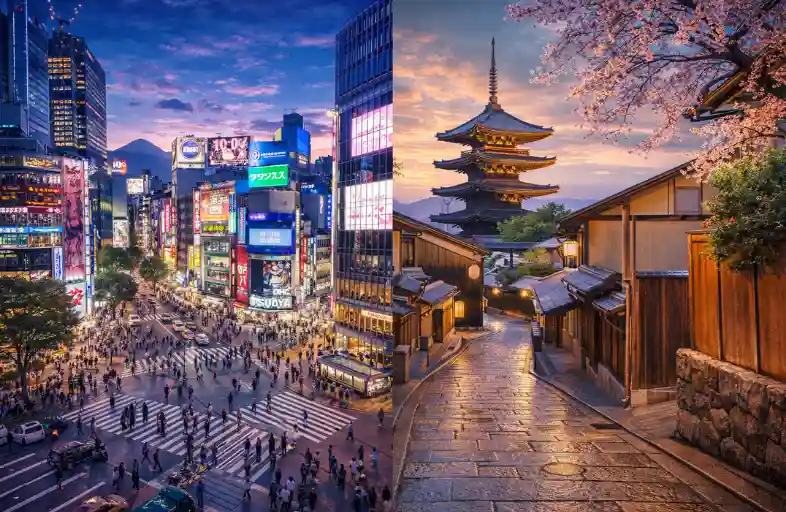
Planning a trip to Japan often begins with one big question: Tokyo or Kyoto — which should you visit first? Both cities are incredible, but they offer very different experiences. Tokyo is modern, fast-paced, and full of energy, while Kyoto is calm, traditional, and deeply rooted in Japanese culture.
For first-time travelers, choosing the right starting city can shape your entire journey. Your decision affects jet lag, travel flow, budget, and even how much you enjoy each place. Many travelers search for a clear Tokyo vs Kyoto comparison because they want to make the smartest choice, not just the popular one.
This guide is designed to help you decide which city to visit first in Japan based on your travel style, time, interests, and comfort level. By the end, you’ll know exactly whether Tokyo or Kyoto first makes more sense for your trip.
Quick Verdict: Tokyo or Kyoto First?
But that’s not always the best choice for everyone. The right order depends on your travel style, time, and priorities.
| Travel Preference | Visit First |
| First time in Japan | Tokyo |
| Short trip (5–7 days) | Tokyo |
| Culture & temples focus | Kyoto |
| Modern city life & food | Tokyo |
| Relaxed, slow-paced travel | Kyoto |
| Families with kids | Tokyo |
| Budget-focused travelers | Kyoto |
When to Choose Tokyo First
- You want an easy landing with better transport
- You enjoy modern cities, food variety, and nightlife
- You’re new to Japan and want a smoother start

You might also like: Where to Travel in December
When to Choose Kyoto First
- You want a calm, cultural introduction to Japan
- Temples, history, and tradition matter most
- You prefer a slower, more peaceful pace
Head-to-Head Comparison: Tokyo vs Kyoto
Modern Tokyo vs Traditional Kyoto
The biggest difference in the Tokyo vs Kyoto comparison is the city vibe and energy. Tokyo feels fast, bold, and futuristic. You’ll see skyscrapers, neon lights, advanced technology, and busy streets everywhere. It’s perfect if you love innovation, shopping, nightlife, and modern city life.
Kyoto, on the other hand, feels calm and timeless. The city is filled with temples, shrines, gardens, wooden houses, and quiet streets. Life moves slower here, making it ideal for travelers who want peace, tradition, and cultural depth.
In simple terms:
- Tokyo = tech, skyscrapers, modern Japan
- Kyoto = temples, gardens, traditional Japan
Culture & History
When it comes to culture and history, Kyoto clearly stands out. It was Japan’s capital for over 1,000 years and is home to historic temples, Shinto shrines, geisha districts, tea ceremonies, and UNESCO World Heritage sites. If your goal is to understand classic Japanese culture, Kyoto is unmatched.
Tokyo’s culture is different but equally fascinating. You’ll find world-class museums, pop culture, anime, fashion districts, street festivals, and modern traditions that show how Japan blends the old with the new.
Emotional Travel Appeal (What Most Guides Miss)
- Tokyo delivers excitement, energy, and sensory overload. It keeps you curious and amazed at every turn.
- Kyoto offers serenity, reflection, and emotional calm. It’s a place to slow down and truly connect with Japan’s soul.
This emotional difference often decides whether to visit Tokyo or Kyoto first.
Travel Logistics & Planning
Airports & Arrival Order
For most international travelers, Tokyo is the easiest city to start their Japan trip. Tokyo has two major international airports: Narita (NRT) and Haneda (HND). Both are well-connected to the city with trains, buses, and clear English signage, which makes arrival smoother for first-time visitors.
Kyoto does not have its own international airport. Travelers usually fly into Osaka’s Kansai International Airport (KIX) and then take a train to Kyoto. While this route is simple, it requires an extra transfer, which can feel tiring after a long flight. This is why many people choose Tokyo first, Kyoto later.
Transportation Between Tokyo and Kyoto
Traveling between the two cities is fast and easy using the Shinkansen (bullet train).
- Travel time: about 2 to 2.5 hours
- Cost: around ¥13,000–¥14,000 one way
You can buy tickets on the same day, but reserving seats is recommended during busy seasons. A JR Pass may help save money if you plan multiple long-distance trips.
Accessibility for Disabled & Elderly Travelers
Both cities are accessible, but Tokyo is easier to navigate. It has elevators, ramps, clear signs, and staff assistance at most stations. Kyoto is more walkable, but some temples and old areas have stairs and uneven paths. Using barrier-free routes and luggage services can greatly improve comfort in both cities.
Cost Comparison: Tokyo vs Kyoto
Travelers often ask, “Which city is more expensive — Tokyo or Kyoto?” Here’s a clear breakdown to help you plan your budget.
Average Daily Budget
- Tokyo: Expect around ¥15,000–¥20,000 ($110–$150 USD) per day for a mid-range traveler. This covers meals, transport, and sightseeing.
- Kyoto: Slightly cheaper, around ¥12,000–¥18,000 ($90–$135 USD) per day, especially if you focus on cultural sites and local dining.
Accommodation Tiers
- Budget: Hostels or capsule hotels
- Tokyo: ¥2,500–¥5,000 per night
- Kyoto: ¥2,000–¥4,000 per night
- Mid-range: Business hotels or guesthouses
- Tokyo: ¥8,000–¥15,000 per night
- Kyoto: ¥6,000–¥12,000 per night
- Luxury: High-end hotels or ryokans
- Tokyo: ¥25,000+ per night
- Kyoto: ¥20,000+ per night
Tips for Saving Money
- Use a JR Pass for intercity travel
- Eat at local markets, izakayas, or street stalls
- Book hotels early to secure better rates
- Take advantage of free attractions like parks and shrines
Overall, Kyoto tends to be slightly more budget-friendly, but both cities can fit a variety of budgets with careful planning.
Food & Dining Showdown: Tokyo vs Kyoto
One of the best ways to experience Japan is through its food, and both Tokyo and Kyoto have unique offerings.
Tokyo: Food Hotspots & Variety
Tokyo is a paradise for food lovers. From Michelin-starred restaurants to casual ramen shops, sushi counters, and international cuisine, the city offers an incredible variety. Must-visit areas include Tsukiji Market, Shibuya, and Ginza, where you can sample everything from fresh seafood to trendy street snacks. If you love modern Japanese cuisine and innovative dishes, Tokyo will keep you amazed.
Kyoto: Traditional Specialties
Kyoto is all about traditional flavors. Famous for kaiseki (multi-course meals), tofu dishes, matcha sweets, and yudofu (simmered tofu), the city offers a slower, more mindful dining experience. Don’t miss Nishiki Market, known as “Kyoto’s Kitchen,” where you can try pickles, sweets, and local snacks.
Street Food & Markets
Both cities have vibrant street food scenes:
- Tokyo: Takoyaki, taiyaki, and crepes in street stalls
- Kyoto: Yatsuhashi (sweet cinnamon treats), skewered snacks near temples
In short, Tokyo excites your taste buds with variety and energy, while Kyoto delights with traditional, authentic flavors.
Seasonal Travel Considerations: When to Visit Tokyo & Kyoto
The best time to visit Tokyo or Kyoto depends on the season, as each city offers unique experiences throughout the year.
Spring: Cherry Blossoms (Sakura)
- Late March to early April is the peak cherry blossom season.
- Both Tokyo and Kyoto are stunning, but Kyoto’s temple gardens and riverbanks are especially picturesque.
- Expect crowds, so plan early and book accommodations in advance.
Fall: Autumn Leaves & Festivals
- October to November brings vibrant autumn colors.
- Kyoto’s temples and gardens are famous for red maple leaves.
- Tokyo has parks and shrines with beautiful fall foliage and seasonal festivals.
Summer: Heat & Humidity
- June to August can be hot and humid.
- Summer festivals (matsuri) are fun but crowded.
- Stay hydrated and plan morning or evening activities to avoid the heat.
Winter: Lights & Calm Atmosphere
- December to February is cold but magical.
- Tokyo has dazzling winter illuminations.
- Kyoto offers a peaceful, serene atmosphere, perfect for temple visits without crowds.
What to Do: Top Highlights in Tokyo & Kyoto
Japan is full of incredible experiences, and both Tokyo and Kyoto have something unique for every traveler.
Tokyo Highlights
- Shibuya Crossing & Shinjuku: Iconic bustling districts full of neon lights and energy
- Asakusa & Senso-ji Temple: A mix of tradition and modern souvenirs
- Harajuku & Omotesando: Trendy fashion streets and quirky cafes
- Tsukiji Outer Market: Fresh seafood, sushi, and street snacks
- Odaiba & TeamLab Borderless: Futuristic attractions and entertainment hubs
Kyoto Highlights
- Kinkaku-ji (Golden Pavilion) and Ginkaku-ji (Silver Pavilion): Stunning UNESCO World Heritage sites
- Fushimi Inari Shrine: Famous for thousands of vermilion torii gates
- Arashiyama Bamboo Forest: Serene walk through towering bamboo
- Philosopher’s Path: Picturesque stroll along canals and temples
- Nijo Castle & Kiyomizu-dera: Historic landmarks showing traditional Japanese architecture
Hidden Gems Only Locals Know
Tokyo Off-Beat Experiences:
- Yanaka district: Old Tokyo charm with small shops and quiet streets
- Shimokitazawa: Bohemian vibe with cafes, thrift shops, and live music
Kyoto Quiet Spots:
- Otagi Nenbutsu-ji Temple: Less crowded, quirky stone statues
Sample Itineraries: How to Plan Your Tokyo & Kyoto Trip

Planning your Tokyo vs Kyoto trip can feel overwhelming, but having a clear itinerary makes your journey smooth and enjoyable. Here are a few sample plans based on different trip lengths:
Day Tokyo → Kyoto Itinerary
Tokyo
- Explore Shibuya, Shinjuku, and Harajuku
- Visit Asakusa Temple and Tsukiji Outer Market
- Optional day trip to Odaiba or Nikko
Kyoto
- Visit Fushimi Inari Shrine, Kinkaku-ji, and Arashiyama Bamboo Forest
- Walk the Philosopher’s Path
- Experience a traditional tea ceremony and local cuisine
10-Day Combined Trip
- Day 1–5: Tokyo highlights + day trips (Nikko, Hakone, or Mt. Fuji)
- Day 6–10: Kyoto main attractions + nearby towns (Nara, Uji)
- Include flex days for shopping, street food, and exploring hidden gems
Quick Weekend Visit Strategy
- 2 Days in Tokyo: Shibuya, Senso-ji, Meiji Shrine, and local food markets
- 1–2 Days in Kyoto: Fushimi Inari, Kinkaku-ji, and quick strolls through temple districts
- Tip: Focus on one city at a time and prioritize top attractions
Who Should Go Where First? (Persona-Based Guide)
Not every traveler should follow the same Tokyo vs Kyoto first strategy. Your travel style, interests, and pace can make a big difference. Here’s a persona-based guide to help you decide:
1. First-Time Solo Traveler
- Start in Tokyo: Easy to navigate, lots of social opportunities, and modern attractions.
- Great for meeting people, exploring pop culture, and getting a high-energy introduction to Japan.
2. Families with Kids
- Start in Tokyo: Family-friendly attractions like Ueno Zoo, Disneyland, and teamLab Borderless.
- Smooth transportation and plenty of food options make it ideal for families.
3. Food Lovers
- Tokyo is first if you want variety, street food, and Michelin-starred options.
- Kyoto is perfect for those seeking traditional Japanese cuisine, including kaiseki, tofu dishes, and matcha sweets.
4. Budget Travelers
- Kyoto can be slightly cheaper for accommodation and local meals.
- Tokyo can be explored on a budget too, but costs are generally higher for hotels and attractions.
5. Culture & Relaxation Seekers
- Kyoto first: Ideal for temple visits, gardens, and a slower, reflective pace.
- Perfect for travelers who want a peaceful, cultural introduction to Japan before heading to the busy streets of Tokyo.
Common Mistakes to Avoid on Your Tokyo & Kyoto Trip
Even with careful planning, travelers often make mistakes that reduce enjoyment. Here’s what to watch out for when deciding between Tokyo and Kyoto first:
1. Trying to Do Too Much, Too Fast
- Packing every attraction into one day can lead to stress and fatigue.
- Tip: Prioritize top sites and leave time to explore hidden gems or relax at a café.
2. Ignoring Travel Seasons
- Visiting the cherry blossom season or autumn leaves without booking early can mean crowded attractions and higher prices.
- Summer brings heat and humidity, which can make walking around uncomfortable. Plan according to seasonal conditions.
3. Poor Transportation Planning
- Not reserving Shinkansen seats or misunderstanding JR Pass usage can waste time and money.
- Failing to account for airport transfers, city navigation, or luggage forwarding can make your trip stressful.
FAQs: Tokyo vs Kyoto Travel Questions
Q1: How many days should I spend in Tokyo and Kyoto?
A: For Tokyo, plan 3–5 days to explore major neighborhoods, attractions, and maybe a day trip. For Kyoto, 2–4 days is enough to enjoy temples, gardens, and cultural experiences. If your trip is short, focus on one city first and plan the other based on your time and interests.
Q2: Should I visit Osaka too?
A: Absolutely! Osaka is just 15–30 minutes by train from Kyoto. It’s famous for street food, nightlife, and Universal Studios Japan. You can include it as a day trip from Kyoto or combine it into a longer Japan itinerary.
Q3: Which city is better for nightlife — Tokyo or Kyoto?
A: Tokyo is the winner for nightlife, offering bars, clubs, karaoke, and late-night dining. Kyoto, on the other hand, is more relaxed, perfect for quiet evening walks, traditional tea houses, and cozy izakayas.
Q4: Is Kyoto walkable?
A: Yes! Kyoto’s temple districts and historic streets are very walkable. Some areas have stairs or uneven paths, so wear comfortable shoes. Tokyo is also walkable but involves longer distances and heavier crowds, so plan your routes carefully.
Conclusion:
Choosing whether to visit Tokyo or Kyoto first sets the tone for your Japan trip. Tokyo is perfect if you love modern cities, vibrant energy, and food variety, while Kyoto is ideal for culture, temples, gardens, and a slower, reflective pace.
For first-time travelers or those with limited time, starting in Tokyo is usually easier, thanks to its airports, transportation, and bustling atmosphere. If your goal is to immerse yourself in traditional Japan and enjoy a calmer start, Kyoto should be your first stop.
No matter which city you choose first, both Tokyo and Kyoto are unforgettable, each offering unique experiences that will leave you inspired and in love with Japan.