

Planning a spring break trip in 2026 is not just about choosing a fun destination anymore—it is also about checking the latest spring break destinations travel advisories to stay safe. Many popular locations, especially in places like Mexico and the Caribbean, now come with updated travel advisory warnings, making it important for travelers to stay informed before booking.
Today’s travelers are not only searching for the best spring break destinations, but also asking questions like “Is it safe to travel?” and “Which places have lower risk?” because safety has become a top priority. Government updates, crime reports, and seasonal risks all play a big role in travel decisions.
This guide will help you understand safe vs risky destinations, explain travel advisory levels, and highlight the safest options for a worry-free spring break in 2026.
Quick Answer – Is It Safe to Travel for Spring Break in 2026?
In short, spring break travel in 2026 is safe in some places, but risky in others. Many travelers are still planning trips, but updated spring break destinations travel advisories show clear differences between safe and unsafe regions. Popular beach spots in the U.S. and parts of Europe are generally low-risk, while some areas in Mexico and high-tourist zones carry moderate to high risk warnings due to crime and overcrowding.
The key takeaway is simple: always check the latest travel advisory levels before booking. Safe destinations exist, but ignoring warnings can increase travel risks. Choosing wisely can make your trip both fun and secure.
At-a-Glance Safety Map of Spring Break Destinations 2026
Spring break destinations in 2026 can be grouped into three simple safety levels based on current travel advisories and risk reports.
Safe Destinations: Most U.S. cities, select Caribbean islands, and parts of Europe with low crime and stable conditions. These are best for stress-free travel.
Moderate Risk Destinations: Popular tourist cities where safety is generally fine but risks like scams, crowds, and petty theft exist. Extra caution is needed here.
High-Risk Destinations: Certain regions in Mexico and other areas flagged for crime, cartel activity, or political instability. These require strong caution or may be best avoided.
This simple map helps travelers quickly understand where safety levels stand before planning.
Why Spring Break Travel Advisories Are Important in 2026
Travel advisories matter more in 2026 because spring break travel risk levels increase due to large crowds, seasonal crime spikes, and weather changes. Unlike regular travel months, spring break brings millions of tourists into the same destinations, which can raise safety concerns.
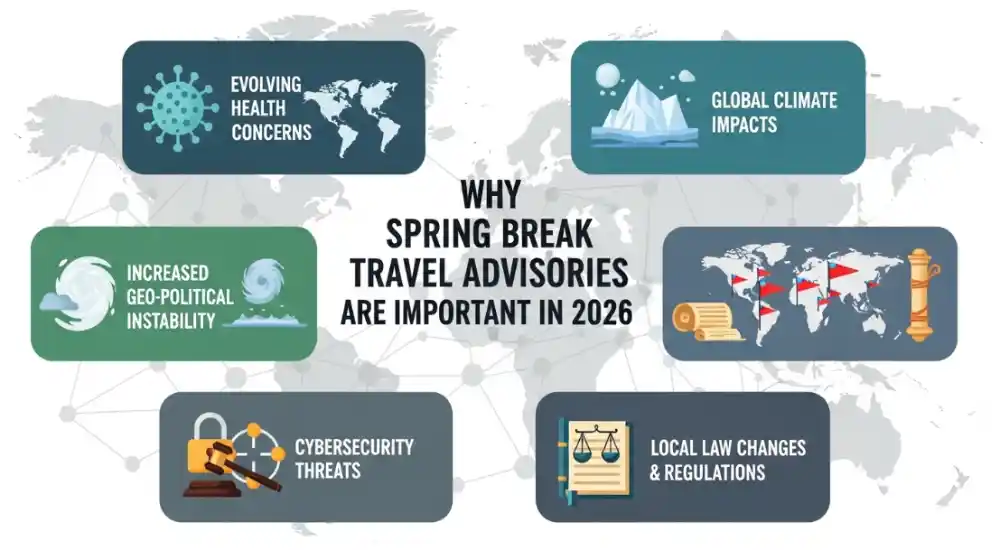
This is why spring break destinations travel advisories are updated more frequently during this period. Governments track issues like crime rates, local instability, and natural risks to protect travelers.
Travel advisories help you avoid unsafe areas, choose better hotels, and plan smarter trips. Simply put, they turn guesswork into safer travel decisions.
How Travel Advisory Levels Work
Understanding travel advisory levels is key to safe trip planning. These levels help travelers know how risky a destination is before they go.
Level 1 to Level 4 Travel Advisory System Explained
Level 1 means “exercise normal precautions,” while Level 4 means “do not travel.” Levels in between show increasing risk, especially in areas with crime or instability.
Who Issues Travel Warnings and Why
Government agencies issue warnings based on safety data, including crime reports, health risks, and political conditions. Their goal is to protect citizens abroad.
How to Check Updated Government Advisories Before Booking
Always check official travel advisory websites before booking flights or hotels. Updates can change quickly, especially during peak spring break seasons.
Latest Government Travel Advisory Insights for Spring Break 2026
For 2026, official travel advisories highlight mixed safety conditions worldwide. The U.S. embassy and government sources continue to monitor high-traffic destinations, especially in Mexico, where certain regions remain under caution due to security concerns.
Mexico’s popular tourist areas may be safe in some zones, but others still carry warnings related to crime and cartel activity. Meanwhile, many Caribbean destinations remain moderately safe, though travelers should still stay alert in crowded tourist areas.
International alerts also show that safety levels vary widely depending on region, so checking updated spring break travel advisories before booking is essential.
High-Risk Spring Break Destinations
Some destinations are marked as high-risk for spring break travel in 2026 due to safety concerns. These areas often require extra caution or may be best avoided.

Mexico Safety Concerns (Cartel Violence, Tourist Zones Affected)
Certain parts of Mexico continue to face security issues, including organized crime activity. While many resorts are safe, nearby regions may still be risky for travelers.
Other Global High-Risk Travel Areas
Some countries with political instability or high crime rates are also flagged in travel advisories. These conditions can change quickly.
Why Some Popular Destinations Still Carry High Risk
Even famous tourist spots can be risky due to overcrowding, scams, or seasonal crime increases during spring break.
Hidden Risk Factors Travelers Overlook
Many travelers focus only on destination names, but hidden risks can affect safety more than location itself.
Seasonal crime often increases during spring break due to high tourist numbers. Overcrowding can also lead to pickpocketing and unsafe situations in busy areas.
Another overlooked issue is limited emergency response in tourist-heavy regions, which can delay help during accidents or incidents. Understanding these hidden risks helps travelers make smarter, safer decisions.
Medium-Risk Spring Break Destinations
Medium-risk destinations are places where travel is generally safe, but extra caution is needed. These locations often have strong tourism industries but also come with issues like scams, petty theft, and overcrowding.
Many popular cities fall into this category because they attract large spring break crowds. While not dangerous, travelers should stay alert, avoid unsafe areas at night, and follow local safety advice.
These destinations can still be enjoyable if travelers stay aware and follow basic safety precautions.
Safest Spring Break Destinations 2026
Some destinations remain consistently safe for spring break travel in 2026 according to current travel advisory insights.
Safest Beach Destinations
These include calm coastal areas with low crime rates and strong tourist safety systems.
Safest U.S. Spring Break Cities
Many U.S. cities offer safe environments with good infrastructure and emergency services.
Safest International Travel Destinations
Certain countries in Europe and Asia remain stable, making them ideal for worry-free travel.
Hidden Safe & Underrated Destinations

Beyond popular tourist spots, there are hidden safe destinations that offer fewer crowds and better affordability.
These places are often overlooked but provide a safer and more relaxed experience. They combine low tourist traffic with strong safety conditions, making them ideal for travelers who want peace and security.
Choosing underrated destinations can also help avoid overcrowding risks during peak spring break season.
Safe vs Cheap Spring Break Destinations (Safety vs Budget Tradeoff)
Not all cheap destinations are safe, and not all safe destinations are expensive. Some budget-friendly locations may carry higher risks due to crime or overcrowding.
On the other hand, many safe destinations offer affordable travel options if planned early. The best approach is finding a balance between cost, safety, and comfort.
Smart travelers prioritize safety first and then adjust their budget accordingly for the best experience.
Real-World Safety Risks During Spring Break Travel
Spring break travel comes with real-world risks that go beyond destination choice.
Weather Risks (Storms, Hurricanes, Heatwaves)
Weather can impact travel safety, especially in coastal and tropical areas.
Political Instability & Tourism Impact
Some regions experience sudden changes that affect visitor safety.
Overcrowding and Safety Risks in Tourist Zones
Large crowds can increase theft, delays, and general safety concerns.
Spring Break Travel Safety Checklist 2026
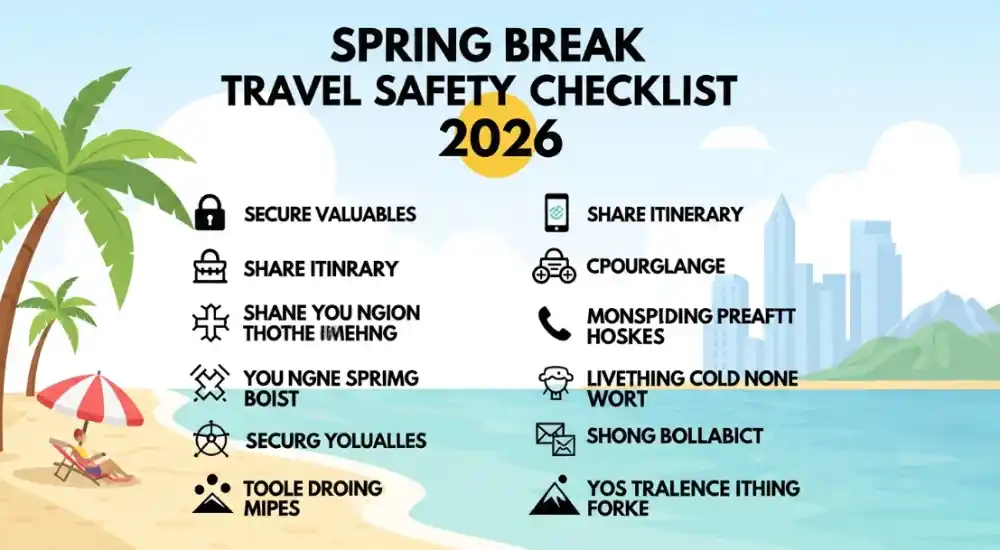
Before traveling, always follow a simple safety checklist.
Check your destination’s advisory level, confirm hotel safety, and review local conditions before booking. Pack essential documents securely and keep copies stored digitally.
Emergency planning is also important—know local emergency numbers and nearest hospitals before arrival.
Digital Safety Tips for Travelers
Travel safety is not only physical—it is also digital.
Protect your phone with strong passwords and avoid using public Wi-Fi for banking or sensitive tasks. Cyber scams often target travelers during peak seasons like spring break, so staying alert online is important.
How to Avoid Common Spring Break Travel Mistakes
Many travel issues come from simple mistakes. Booking based only on price can lead to unsafe destinations. Ignoring updated travel advisory warnings is another common error.
Not buying travel insurance can also create problems if emergencies happen. Being prepared helps avoid these risks.
Expert Travel Safety Tips for Spring Break 2026
Solo travelers should stay in well-reviewed areas and avoid isolated places at night. Students should travel in groups when possible and follow local rules.
Families should prioritize safe, quiet destinations with strong infrastructure and healthcare access. These small choices greatly improve travel safety.
How to Choose the Safest Spring Break Destination
Choosing the right destination starts with checking travel advisory levels first. Then compare safety, cost, and crowd levels before booking.
Avoid destinations with high-risk alerts and prioritize places with stable conditions. A balanced decision ensures a safer and more enjoyable trip.
FAQs – Spring Break Destinations Travel Advisories 2026
1. What are spring break travel advisories?
Spring break travel advisories are official safety updates issued by governments to warn travelers about risks in certain destinations. They highlight issues like crime, political instability, health risks, and weather conditions so travelers can make safer choices before booking.
2. Is Mexico safe for spring break in 2026?
Some parts of Mexico are safe for tourists, especially major resort areas, but other regions still have travel advisory warnings due to crime and cartel activity. It is important to check updated advisories before planning your trip and avoid high-risk zones.
3. What are the safest spring break destinations in 2026?
Safest destinations usually include low-crime U.S. cities, select Caribbean islands, and stable European countries. These areas generally have strong tourism infrastructure and lower safety risks compared to high-advisory regions.
4. How can I check travel advisories before booking a trip?
You can check official government websites that publish travel advisory levels (1–4 system). These updates include safety warnings, entry rules, and risk alerts that help you decide whether a destination is safe or not.
5. What is the safest way to plan a spring break trip?
The safest way is to first check travel advisories, then compare safe destinations, and finally book early. Always consider safety, budget, and crowd levels together instead of focusing only on cheap deals.
6. Why do travel advisories change during spring break?
Advisories often change during spring break because of increased tourism, overcrowding, seasonal crime spikes, and weather risks. Governments update warnings to help travelers avoid unsafe conditions during peak travel periods.
7. Are cheap spring break destinations always risky?
Not always, but some cheap destinations may have higher safety risks. It is important to balance cost with safety by checking travel advisories, local conditions, and tourist safety records before booking.
Final Verdict
Spring break travel in 2026 can be safe if planned carefully. The key is to follow updated travel advisories, choose safer destinations, and avoid high-risk areas.
By balancing safety, budget, and awareness, travelers can still enjoy spring break without unnecessary risks. Always prioritize safety first before making final travel decisions.