
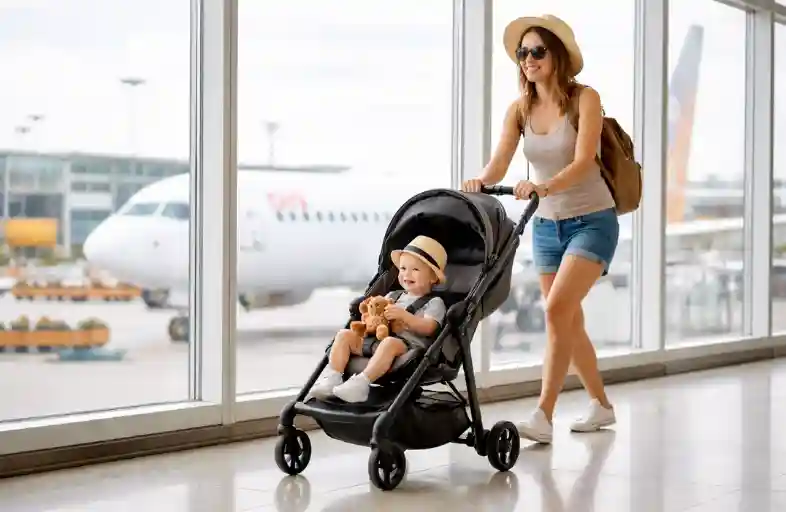
Traveling with a baby sounds exciting — until you reach the airport with a bulky stroller, tight security lines, and limited overhead space. Suddenly, something as simple as moving from gate to gate feels stressful.
This is exactly why more parents start searching for the best travel stroller before flying.
The truth is, not every stroller labeled “travel” is actually airline-friendly. Some are still too heavy, others don’t fold compactly, and many fail when it comes to real-world travel like international trips, cobblestone streets, or tight hotel rooms.
In this complete guide, you’ll learn what a travel stroller really is, whether you actually need one, and how to choose the best travel stroller for flying, international travel, toddlers, or newborns. We’ll also cover airline rules, real-world performance, hidden costs, and common mistakes — so you can travel smarter and stress-free.
Quick Answer: What Is the Best Travel Stroller?
A travel stroller is a lightweight, compact stroller designed for flying and international trips. The best travel strollers weigh under 15 lbs, fold small enough for easy storage, and offer quick one-hand folding, recline for naps, and smooth maneuverability through airports and cities.
What Is a Travel Stroller — And How Is It Different?
A travel stroller is a lightweight, compact stroller designed specifically for trips — especially airplane travel, city breaks, and international travel. Unlike bulky models, a travel-friendly stroller folds small, weighs less (often under 15 lbs), and is easier to carry through airports, trains, and taxis.
But how is it different from other stroller types? Let’s break it down clearly.
Travel Stroller vs Full-Size Stroller
A full-size stroller is built for everyday comfort. It usually has:
- A large storage basket
- Bigger wheels
- More padding
- Strong suspension
- Heavier frame
While it’s comfortable for long walks, it’s not ideal for flying. Most full-size models are too big for overhead bins and often need to be gate-checked.
In comparison, a compact travel stroller focuses on:
- Lightweight design
- Quick fold mechanism
- Smaller folded dimensions
- Easier portability
If you travel often, especially by air, a travel stroller for flying is much more practical.
Travel Stroller vs Umbrella Stroller
An umbrella stroller is lightweight and simple. It folds slim, like an umbrella, and is usually budget-friendly.

However, umbrella strollers often lack:
- Deep recline
- Good suspension
- Strong canopy coverage
- Overhead bin compatibility
A modern best travel stroller offers more features than a traditional umbrella stroller. Many have one-hand fold systems, better comfort, and are designed specifically for airline travel.
Travel Stroller vs Compact Modular Systems
Some brands offer compact modular travel systems that allow car seat attachment. These are flexible but can still be heavier than ultra-light models.
A true lightweight travel stroller focuses on:
- Simplicity
- Smaller fold size
- Easy airport maneuverability
If your priority is overhead bin fit and stress-free boarding, a dedicated travel stroller is usually the better option.
Key Defining Features of a Travel Stroller
Here’s what makes a stroller truly “travel-ready”:
- Under 15 lbs in weight
- Compact folded dimensions
- Overhead bin compatibility
- One-handed quick fold
- Carry strap or travel bag
- Recline option for naps
- Strong but lightweight frame
In simple words, a travel stroller is built for movement — airports, narrow sidewalks, public transport, and quick storage.
Do You Actually Need a Travel Stroller?
Many parents search for the best travel stroller, but the real question is: Do you truly need one? The answer depends on your travel style, airline habits, and your child’s age. Let’s break it down clearly so you can make a smart decision.

You might also like: Where to Stay in the Amalfi Coast
If You Fly 1–2 Times Per Year
If you only fly once or twice a year, you may not need a separate travel stroller for flying. You could gate-check your regular stroller.
However, airports are busy. A lightweight travel stroller that folds quickly and possibly fits in the overhead bin can reduce stress. If convenience matters to you, it may still be worth it.
If You Travel Internationally
For international trips, a compact travel stroller is extremely helpful. You’ll deal with:
- Narrow sidewalks
- Public transport
- Trains and taxis
- Small hotel rooms
A travel-friendly stroller under 15 lbs with a compact fold makes moving around Europe or large cities much easier. This is where the best travel stroller for international travel really proves its value.
If You Mostly Road Trip
If most of your travel is by car, a full-size stroller might work fine. Space is less of a problem.
Still, a foldable travel stroller can save trunk space and be easier for quick stops. It’s not essential — but it adds flexibility.
If You Already Own a Lightweight Stroller
Some parents already own a lightweight stroller. Check its folded size and weight.
If it’s under 15 lbs and folds compactly. You may already have a suitable travel stroller. If not, upgrading to a more compact airline-friendly stroller may improve your travel experience.
If You Use a Baby Carrier
Baby carriers are excellent for airports and boarding. But they can become uncomfortable during long days of walking.
A compact stroller for travel gives your child a place to nap and gives your back a break. Many parents combine both for flexibility.
Best Travel Stroller by Age
Best Travel Stroller for Newborns
- Full recline required
- Head & neck support
- Car seat compatibility preferred
Best Travel Stroller for Toddlers
- Higher weight limit
- Strong frame
- Better canopy & storage
What Makes a Stroller Truly Travel-Friendly?
Not every stroller labeled “travel” is truly built for flying or international trips. Here are the key features that matter most.
Under 15 lbs Weight
Weight is critical. The best lightweight travel stroller usually weighs under 15 lbs. This makes it easier to carry, lift into overhead bins, or gate-check without stress.
Compact Fold Dimensions
A true compact travel stroller folds small enough for tight storage spaces — especially airplane overhead bins. Always check the folded measurements before buying.
One-Hand Fold System
At airports, you often hold your baby, passport, or boarding pass. A one-hand fold stroller makes everything easier and faster.
Suspension Quality
If you’re traveling internationally, especially in Europe, you may encounter cobblestone streets. Good stroller suspension improves comfort and smooth handling.
Recline Capability
Children nap while traveling. A stroller with a proper recline feature is much more comfortable than a basic upright umbrella stroller.
Carry Strap or Travel Bag
A travel stroller with a carry strap or an included travel bag makes moving through airports smoother. It also protects the stroller if you gate-check it.
Storage Basket Size
Storage space matters. While a travel stroller is compact, it should still hold essentials like diapers, snacks, and travel documents.
Best Travel Stroller – At a Glance
- Ideal weight → Under 15 lbs
- Best for flying → Overhead-bin compatible models
- Best for Europe → Strong suspension + durable wheels
- Best for toddlers → Higher weight capacity (up to 50 lbs)
- Best for newborns → Deep recline or car seat compatibility
- Avoid → Heavy frames, poor suspension, no recline
Quick Comparison Table (At a Glance)
Before diving deep into reviews, here’s a simple travel stroller comparison table to help you quickly compare important features. This format makes it easier to choose the best travel stroller for flying or international travel based on your needs.
| Model Type | Weight | Folded Size | Overhead Bin Fit | Recline | Max Child Weight | Best For | Price Tier |
| Ultra-Compact | 13–15 lbs | Cabin-size fold | Yes (most airlines) | Partial | 40–45 lbs | Flying & city trips | $$ |
| Lightweight Compact | 15–17 lbs | Small but not cabin size | Sometimes | Full recline | 45–50 lbs | International travel | $$–$$$ |
| Budget Travel | 16–18 lbs | Compact fold | No (gate-check) | Limited | 40 lbs | Occasional trips | $ |
| Premium Travel | 14–16 lbs | Overhead compatible | Yes | Deep recline | 50 lbs | Frequent flyers | $$$–$$$$ |
Always double-check airline stroller size rules before flying. Not all cabin-size strollers are accepted on every airline.
The Best Travel Strollers Ranked
Instead of ranking by brand, we’re ranking by real travel situations. This helps you choose the right travel-friendly stroller based on your lifestyle.

Best for Flying (Overhead Bin Compatible)
This category focuses on compact travel strollers that fit in most overhead bins.
Pros
- Very lightweight (under 15 lbs)
- Ultra-compact fold
- Quick one-hand fold
- Ideal for carry-on use
Cons
- Smaller storage basket
- Limited suspension
- May have partial recline
Airline Compatibility
Designed for cabin storage. Still confirm overhead bin dimensions with your airline.
Real-World Use Case
Perfect for parents who fly frequently and want to avoid gate-checking.
Who Should Avoid It
Families who need large storage space or plan long outdoor walks on rough terrain.
Best for International Travel
Built for cobblestones, trains, taxis, and tight hotel rooms.
Pros
- Good suspension system
- Strong wheels for uneven streets
- Compact but sturdy frame
- Comfortable recline for naps
Cons
- Slightly heavier than ultra-light models
- May not fit in all overhead bins
Airline Compatibility
Often gate-check friendly; some models fit overhead bins.
Real-World Use Case
Ideal for European travel, city breaks, and public transportation.
Who Should Avoid It
Parents focused only on ultra-light carry-on convenience.
Best for Toddlers
Designed for children closer to the maximum weight limit.
Pros
- Higher weight capacity (up to 50 lbs)
- Strong frame
- Spacious seat
- Better canopy coverage
Cons
- Slightly bulkier fold
- Heavier than minimal travel strollers
Airline Compatibility
Usually gate-check; some compact options fit overhead.
Real-World Use Case
Best for long travel days with older toddlers.
Who Should Avoid It
Parents with newborns who need a deep recline or car seat compatibility.
Best for Newborns
Focuses on comfort and safety.
Pros
- Deep recline
- Car seat compatibility
- Smooth ride
- Extra canopy coverage
Cons
- Slightly heavier
- Fold may not be ultra-compact
Airline Compatibility
Mostly gate-check; check the folded size before flying.
Real-World Use Case
Great for parents traveling with infants under 6 months.
Who Should Avoid It
Parents want the absolute lightest travel stroller under 13 lbs.
Best Budget Travel Stroller
Affordable but practical.
Pros
- Budget-friendly price
- Lightweight design
- Simple folding system
Cons
- Limited recline
- Basic suspension
- Smaller canopy
Airline Compatibility
Usually, gate-check only.
Real-World Use Case
Good for occasional trips or a backup stroller.
Who Should Avoid It
Frequent international travelers need premium durability.
Lightest Travel Stroller
For parents who prioritize weight above everything.
Pros
- Extremely lightweight (often under 13 lbs)
- Easy to carry through airports
- Compact fold
Cons
- Minimal padding
- Smaller wheels
- Limited features
Airline Compatibility
Often, the overhead bin is compatible.
Real-World Use Case
Ideal for quick airport transfers and short city trips.
Who Should Avoid It
Parents planning rough terrain or long walking days.
Best Premium Travel Stroller
Designed for frequent travelers who want comfort and durability.
Pros
- Strong suspension
- Deep recline
- High-quality materials
- Overhead bin compatibility (select models)
Cons
- Higher price tier
- Slightly heavier than ultra-minimal options
Airline Compatibility
Many premium compact models are cabin-approved.
Real-World Use Case
Perfect for families who travel internationally multiple times per year.
Who Should Avoid It
Budget-conscious buyers or occasional travelers.
Airline Cabin Size & Stroller Policy Guide
If you’re buying a travel stroller for flying, understanding airline rules is extremely important. Many parents assume all compact strollers are cabin-approved — but that’s not always true. Let’s break this down clearly.

Overhead Bin Size Explained
Most airplane overhead bins are designed for cabin bags around 22 x 14 x 9 inches (55 x 35 x 23 cm). However, this can vary by aircraft type.
A stroller labeled “overhead bin compatible” usually folds within or close to these dimensions. Still, acceptance depends on:
- Aircraft size
- Cabin crew discretion
- How full is the flight?
Even the best travel stroller may not be guaranteed cabin space on every flight.
Can a Travel Stroller Fit in Overhead Bins?
Explain clearly:
- Not guaranteed on every flight
- Depends on aircraft + crew discretion
- Why under-15-lb models perform better
Add bullet checklist:
Fold size under cabin limits
Soft carry bag helps
Board early when possible
IATA Cabin Recommendations
The International Air Transport Association (IATA) suggests standard cabin baggage sizing guidelines, but airlines are not required to follow them exactly.
That means:
- One airline may allow a compact travel stroller in the cabin
- Another may require gate-check
Always check your airline’s official stroller size policy before flying.
Gate Check vs Cabin Carry-On
There are two common options when flying with a stroller:
Cabin Carry-On
- Stroller folds small enough to fit overhead
- You keep it with you during the flight
- Lower risk of damage
Gate Check
- You use the stroller until boarding
- Staff stores it in the cargo hold
- You receive it after landing
For many parents, choosing a travel-friendly stroller that fits overhead bins reduces stress and potential damage.
Airline Policy Comparison (Delta, Emirates, British Airways, etc.)
Policies vary significantly:
- Some airlines allow compact strollers as cabin baggage if they meet size limits.
- Others allow only one cabin bag plus stroller if it fits specific dimensions.
- Budget airlines may require strict size compliance.
For example, certain international airlines are stricter about cabin-size stroller dimensions, while others are more flexible on smaller aircraft.
Before traveling internationally, always confirm:
- Folded dimensions
- Weight limits
- Whether the stroller counts as your carry-on
What Happens If Your Stroller Is Rejected at Boarding?
Even if your stroller technically fits size limits, crew may ask you to gate-check it if:
- Overhead bins are full
- The aircraft is smaller than expected
- It appears oversized
If this happens:
- Fold it properly
- Use a travel bag if available
- Remove loose accessories
This is why many frequent flyers choose a lightweight travel stroller under 15 lbs with proven airline compatibility.
Travel Stroller vs Regular Stroller (Full Breakdown)
Choosing between a travel stroller vs regular stroller depends on how often you travel and what matters most to you.
Weight Comparison
- Travel stroller: Usually under 15–17 lbs
- Regular stroller: Often 20–30+ lbs
If portability matters, a lightweight travel stroller wins easily.
Fold Size Difference
- Travel strollers fold compactly and may fit in overhead bins
- Regular strollers take up more trunk or cargo space
For airplane travel, a compact fold stroller is much more practical.
Maneuverability
- Regular strollers often have larger wheels and stronger suspension
- Travel strollers are designed for smooth surfaces like airports and sidewalks
If you plan rough terrain walks daily, a full-size stroller may feel sturdier.
Storage Capacity
- Regular strollers usually have large storage baskets
- Travel strollers have smaller but functional storage
For long shopping trips, a full-size model may be better.
Comfort Level
- Regular strollers often have deeper padding and larger seats
- Travel strollers focus on portability while still offering recline options
For frequent travel days, the best travel stroller balances comfort and compact design.
When a Regular Stroller Is Better
A regular stroller may be better if:
- You rarely fly
- You need large storage space
- You walk daily on rough terrain
- Your child prefers a wider seat
Travel Stroller vs Umbrella Stroller
Many parents confuse these two. While both are lightweight, they are not the same.
| Feature | Travel Stroller | Umbrella Stroller |
| Weight | 13–17 lbs | 10–15 lbs |
| Fold Type | Compact square fold | Slim umbrella fold |
| Overhead Bin Fit | Often yes | Rarely |
| Recline | Usually adjustable | Limited or minimal |
| Suspension | Moderate | Basic |
| Best For | Flying & international travel | Short trips & errands |
An umbrella stroller is simple and budget-friendly. However, a modern travel stroller is designed specifically for airline travel, compact storage, and better overall comfort. If your main goal is airplane compatibility and international travel convenience, a dedicated travel stroller for flying is usually the smarter choice.
Travel Stroller vs Baby Carrier
Many parents wonder whether they should bring a travel stroller or just rely on a baby carrier. Both are useful, but they serve different purposes during travel.

Airport Security
A baby carrier can be very convenient at security checks. In many airports, you can walk through security while wearing your baby.
With a compact travel stroller, you’ll need to fold it and place it on the scanner belt. If your stroller has a one-hand fold system, this becomes much easier.
Best option: If you want speed and simplicity, carriers are easier at security. But a lightweight stroller still works well if it folds quickly.
Boarding
When boarding a plane, a travel stroller for flying can be used until the gate. If it fits in the overhead bin, you can carry it onboard. Otherwise, you’ll gate-check it.
A baby carrier makes boarding easier because your hands stay free. However, after landing, you may need to wait for a gate-checked stroller.
Sleep Comfort
For naps, a travel-friendly stroller with recline is usually more comfortable. Babies and toddlers can stretch out and sleep better.
Carriers are great for short naps, but long walking days can become tiring for both parent and child.
Long Walking Days
During city tours or theme parks, carrying your baby for hours can strain your back.
A lightweight travel stroller under 15 lbs allows your child to rest while you move freely. It also gives you space for snacks and essentials in the storage basket.
When to Combine Both
Many experienced travelers combine both:
- Use a baby carrier for airport security and boarding
- Use a compact travel stroller for sightseeing
This approach gives flexibility and reduces stress.
Choosing the Right Travel Stroller Based on Your Trip Type
Not all travel is the same. The best travel stroller depends on where and how you travel.

Europe (Cobblestones & Trains)
European cities often have cobblestone streets and public transport.
Look for:
- Strong wheel suspension
- Durable frame
- Compact fold for trains
- Easy maneuverability
A travel stroller for international travel should handle uneven surfaces smoothly.
Disney / Theme Parks
Theme parks involve long walking days and frequent folding.
Choose:
- Comfortable seat with recline
- Good canopy coverage
- Quick one-hand fold
- Lightweight design
Storage space is important for snacks and essentials.
Cruise Travel
Cruise ships have narrow hallways and smaller cabins.
Look for:
- Compact folded size
- Easy storage under beds or in closets
- Lightweight frame for gangways
A small travel-friendly stroller makes cabin storage easier.
Road Trips
If you mostly travel by car, overhead bin size is less important.
Focus on:
- Comfort
- Storage basket size
- Easy trunk storage
A slightly larger compact stroller may work well here.
City Breaks
Short city trips require flexibility.
Choose:
- Lightweight design
- Easy fold
- Smooth maneuverability
- Moderate suspension
A compact travel stroller works perfectly for taxis and public transport.
Long-Haul International Flights
For long flights, cabin compatibility matters more.
Choose:
- Overhead bin compatible stroller
- Under 15 lbs weight
- Easy folding system
This reduces stress during boarding and layovers.
Durability & Real-World Performance Testing
Many guides focus only on features. But real-world performance matters more.
Cobblestone Handling
Test how the stroller moves on uneven surfaces.
- Does it shake too much?
- Is the suspension strong enough?
For Europe travel, strong wheels and suspension are essential.
Airport Maneuverability
Airports have smooth floors but tight corners.
A good travel stroller for flying should:
- Turn easily
- Move smoothly
- Not tip when loaded
Folding Speed Test
Time how long it takes to fold the stroller.
A one-hand fold stroller should fold in seconds. This is helpful during boarding or taxi loading.
Stability Test
Check:
- Does it tip when a bag is on the handle?
- Is the frame sturdy at full recline?
A stable stroller increases safety and comfort.
Wheel Quality Comparison
Wheel size and material matter.
- Larger wheels handle uneven surfaces better
- Strong materials last longer
- Smooth bearings improve airport movement
A high-quality wheel system separates a basic stroller from the best lightweight travel stroller for international use.
Hidden Costs & Accessories Most Guides Ignore
When choosing the best travel stroller, most guides only talk about weight and fold size. But smart parents look beyond that. Let’s talk about the hidden costs that can affect your final decision.
Travel Bag
Many compact travel strollers do not include a travel bag. If you plan to gate-check your stroller, a protective bag is important.
Without one:
- Scratches are common
- Wheels may get damaged
- Fabric can tear
Some premium models include a bag, while others require a separate purchase.
Rain Cover
Weather changes quickly, especially during international travel.
A travel stroller rain cover may not be included. Buying one separately adds cost — but it protects your child during sudden rain.
If you’re traveling to Europe or rainy cities, this accessory becomes essential.
Replacement Wheels
Wheels wear out, especially on cobblestone streets.
A lightweight travel stroller may have smaller wheels, which can wear faster. Check if replacement wheels are available and how much they cost.
Cup Holders
Small detail — big convenience.
Many budget travel strollers do not include cup holders. You may need to buy them separately.
Repair Abroad Issues
If your stroller breaks during international travel, repairs can be difficult.
Ask yourself:
- Does the brand offer global warranty?
- Are parts easy to find?
A cheap stroller may cost more long-term if repairs are hard to manage abroad.
Travel Insurance Coverage
Some travel insurance policies cover damaged strollers during flights — but not all.
If you’re flying often with a travel stroller for flying, it’s worth checking your coverage in advance.
Travel Stroller Safety & Certifications
Safety should always come first when choosing a travel-friendly stroller.

JPMA Certification
The JPMA (Juvenile Products Manufacturers Association) certification ensures the stroller meets U.S. safety standards.
If safety is your top priority, look for certified models.
5-Point Harness
A 5-point harness system secures your child at:
- Both shoulders
- Both hips
- Between the legs
This is safer than basic 3-point systems, especially for active toddlers.
Brake Systems
A strong brake system prevents the stroller from rolling unexpectedly.
Test:
- Is the brake easy to engage?
- Does it lock both rear wheels?
Good brakes are important on slopes and train platforms.
Tipping Resistance
Some lightweight strollers can tip backward if heavy bags hang on the handle.
Check:
- Frame stability
- Balance when reclined
- Base width
A stable compact travel stroller improves safety.
Weight Limits
Always check the maximum child weight limit.
Some ultra-light models support up to 40 lbs, while others go up to 50 lbs. Choosing the right limit ensures long-term usability.
Long-Term Value — Will You Outgrow It?

Buying a stroller is an investment. Think beyond your next trip.
Child Weight Limits
If your child is already close to the limit, the stroller may not last long.
Choosing a model with a higher weight capacity gives more value.
Age Suitability
Some travel strollers for newborns offer deep recline or car seat compatibility. Others are better for toddlers.
Make sure the stroller fits your child’s current age and stage.
Resale Value
Premium brands often hold their value better.
If you plan to resell your best lightweight travel stroller later, quality matters.
Second-Child Planning
If you plan for another baby, durability becomes more important.
A well-built compact travel stroller can last for multiple children.
Durability Over Time
Look at:
- Frame material
- Wheel quality
- Fabric stitching
- Warranty coverage
A stroller that lasts 4–5 years provides far better long-term value than replacing cheaper models repeatedly.
FAQs About Travel Stroller
Does a travel stroller fit in overhead bins?
Some travel strollers are designed to fit in standard overhead bins, usually within 22 x 14 x 9 inches. However, airline policies vary. Even if a stroller is labeled overhead bin compatible, final approval depends on aircraft size and cabin space. Always check your airline’s cabin baggage rules before flying.
Do airlines charge for strollers?
Most airlines allow parents to bring a stroller free of charge. You can usually gate-check it or, if it meets size rules, bring a compact travel stroller into the cabin. However, low-cost airlines may have stricter carry-on limits. Always confirm baggage policies before departure.
Can newborns use travel strollers?
Some travel strollers for newborns offer deep recline or car seat compatibility. However, not all lightweight models are suitable for infants. If traveling with a newborn, choose a stroller with full recline and proper head support to ensure safety and comfort.
Is a travel stroller worth it?
A travel stroller is worth it if you fly often, travel internationally, or visit busy cities. It reduces airport stress, folds compactly, and is easier to carry. If you rarely travel, a regular stroller may be enough. It depends on your travel frequency and needs.
What is the lightest travel stroller?
The lightest travel stroller models typically weigh under 13 lbs. These ultra-light designs are ideal for airports and quick trips. However, lighter strollers may offer less padding and smaller wheels, so balance weight with comfort and durability.
Are travel strollers safe for long walks?
Yes, most modern travel-friendly strollers are safe for long walks on smooth surfaces. However, their smaller wheels may not perform as well on rough terrain. For cobblestone streets or uneven paths, choose a model with strong suspension and stable frame design.
Final Recommendation — Who Should Buy a Travel Stroller in 2026?
A travel stroller is ideal for parents who:
- Fly multiple times per year
- Travel internationally
- Visit theme parks or busy cities
- Need a lightweight, compact stroller under 15 lbs
- Want overhead bin compatibility
If convenience, portability, and stress-free airport movement matter to you, investing in the best travel stroller for flying can make every trip smoother. Before buying, compare weight, folded size, airline compatibility, and safety features carefully. The right stroller isn’t just about travel — it’s about making family trips easier and more enjoyable.